
Rieti Plain and Valle Santa
Poggio Bustone
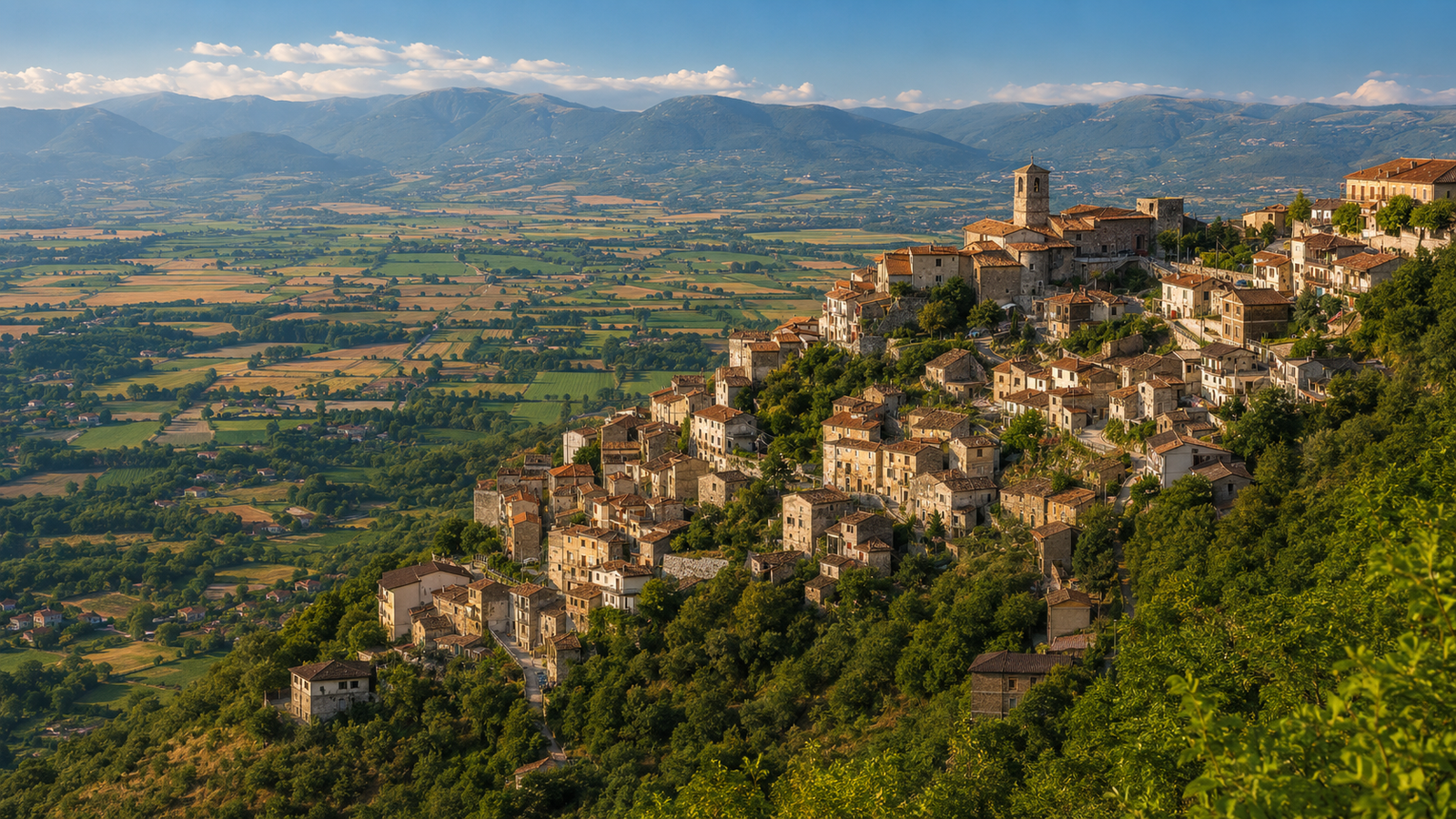
Poggio Bustone overlooks the Rieti Plain from the slopes of Monte Rosato, in the heart of Valle Santa. It is the village of Saint Francis’s greeting, the trails to the Sacro Speco and the music of Lucio Battisti: a place where spirituality, views and memory coexist within a few kilometres.
Rieti Plain
Poggio Bustonebetween Francis and Battisti
Poggio Bustone overlooks the Rieti Plain from the slopes of Monte Rosato, 756 metres above sea level. The village looks across Valle Santa and remains closely connected with woodland, high meadows and the paths climbing towards the Sanctuary of San Giacomo and the Sacro Speco.
Its identity brings together two stories separated by centuries. Tradition places Saint Francis’s arrival here in 1208 and his famous greeting “Good morning, good people!”; in 1943 Poggio Bustone became the birthplace of Lucio Battisti, adding its name to the history of Italian music.
On this page you can
- Discover the old village, Porta del Buongiorno and the Franciscan sites
- Follow the memory of Lucio Battisti through Giardini di Marzo and his birthplace
- Find your way through Monte Rosato, Prati di San Giacomo, woodland and views over Valle Santa

Valle Santa
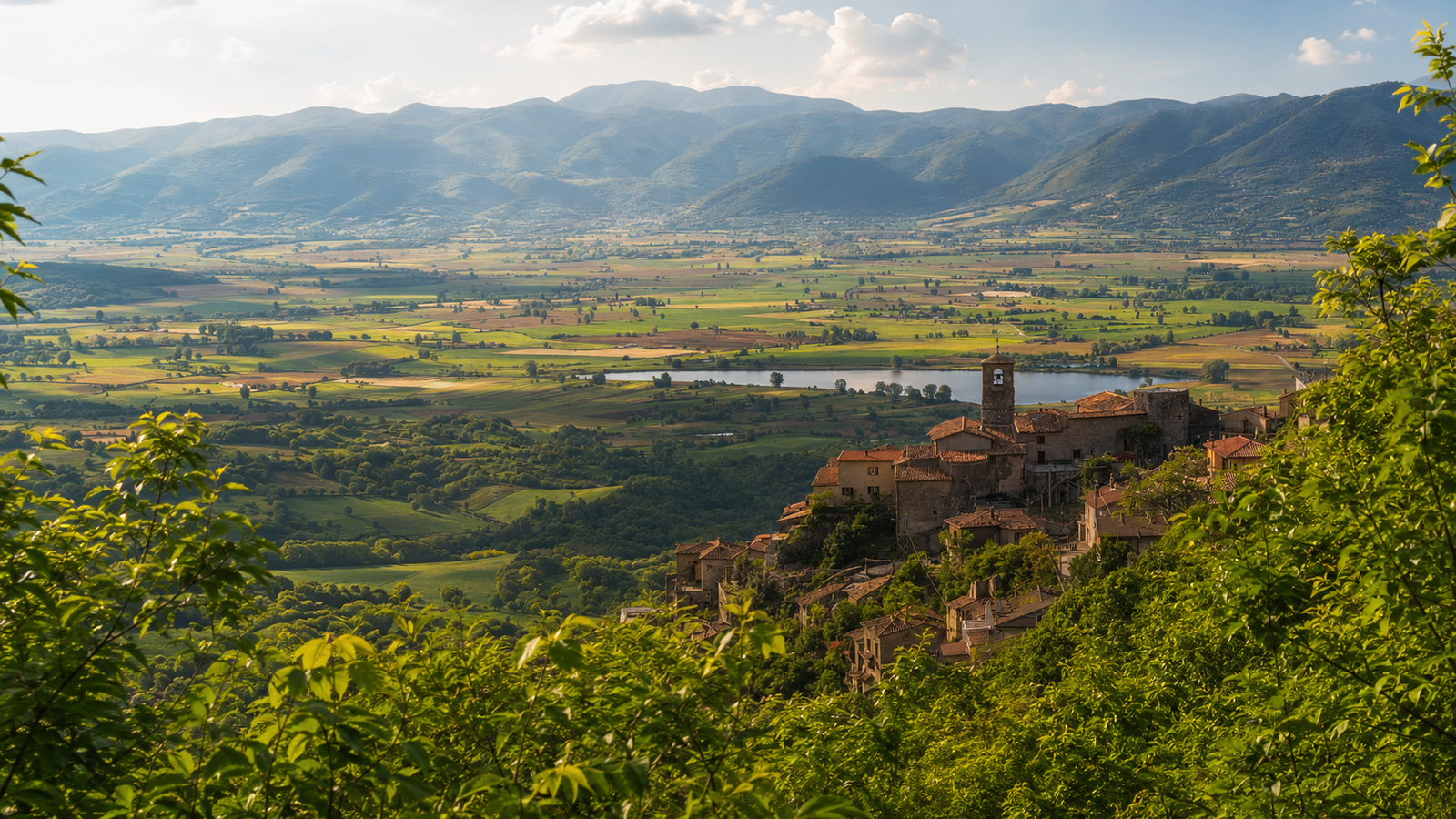
The village dominates the Rieti Plain with deep, open views.
San Francesco
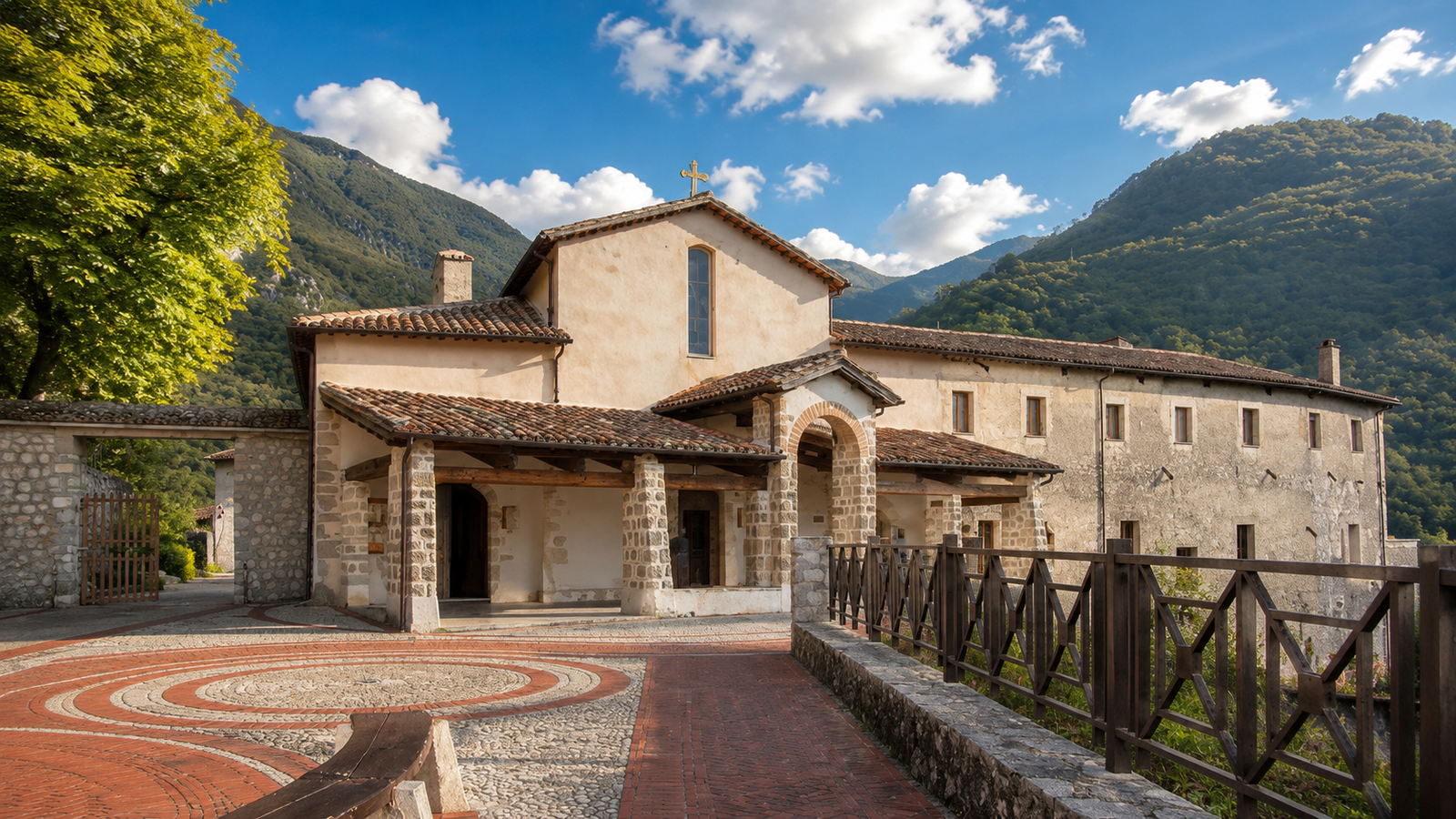
Sanctuary, Sacro Speco and Porta del Buongiorno recall his passage.
Lucio Battisti
The singer-songwriter’s birthplace preserves a unique musical memory.
Monte Rosato
Meadows, woodland and paths rise above the village and its Franciscan sites.
What to see
Poggio Bustoneto discover
Francis, music and mountain
Poggio Bustone dominates Valle Santa from the mountain slopes and preserves a unique identity: the sites of Saint Francis, the medieval village, the memory of Lucio Battisti and paths climbing towards Monte Rosato. This section guides you through spirituality, music, panoramic views and highland nature.
- Sanctuary and Sacro Speco along the sites of Saint Francis
- Old village and Porta del Buongiorno in the historic centre
- Giardini di Marzo and the memory of Lucio Battisti
- Paths towards Monte Rosato and Prati di San Giacomo
In the village and nearby
Local producers
A useful, up-to-date selection, ordered by relevance, quality and proximity.
Stories of Poggio Bustone
A villagebetween Francis and Battisti
Perched on the mountain slopes, Poggio Bustone shaped its identity through spirituality, frontier life and popular culture.
Tradition links the village with Saint Francis’s arrival in 1208 and the famous greeting “Good morning, good people!”. Centuries later, Lucio Battisti was born here in 1943: two figures far apart in time, yet both made Poggio Bustone recognisable far beyond Sabina.
- Local history
- Village identity
- Memory of Sabina
In the village and nearby
Local services
A useful, up-to-date selection, ordered by relevance, quality and proximity.
Village events calendar
Events in Poggio Bustone
Events, festivals and local initiatives selected for Poggio Bustone.
No events found
Try changing the selected filters.
Authentic flavours
Poggio Bustonescented with porchetta
Between the village, mountain meadows and local festivals, Poggio Bustone offers direct, generous cooking. Porchetta is the great symbol of the table, accompanied by rustic dishes that speak of tradition, conviviality and territory.
Porchetta di Poggio Bustone, beans with pork rind and pappardelle with wild boar create a story of intense flavours: roast meat, country cooking and mountain aromas, in a tradition still alive in village festivals and family tables.
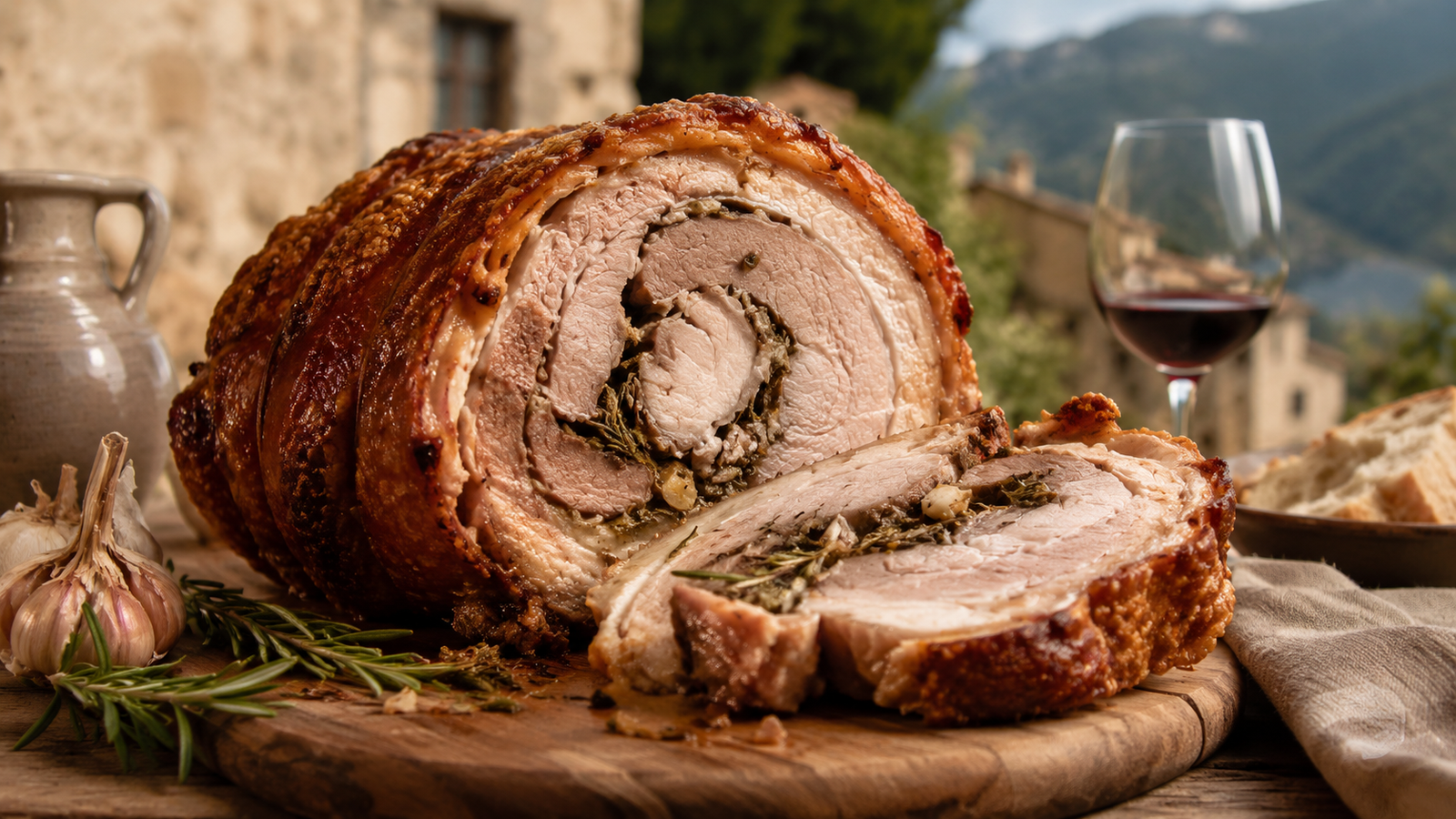
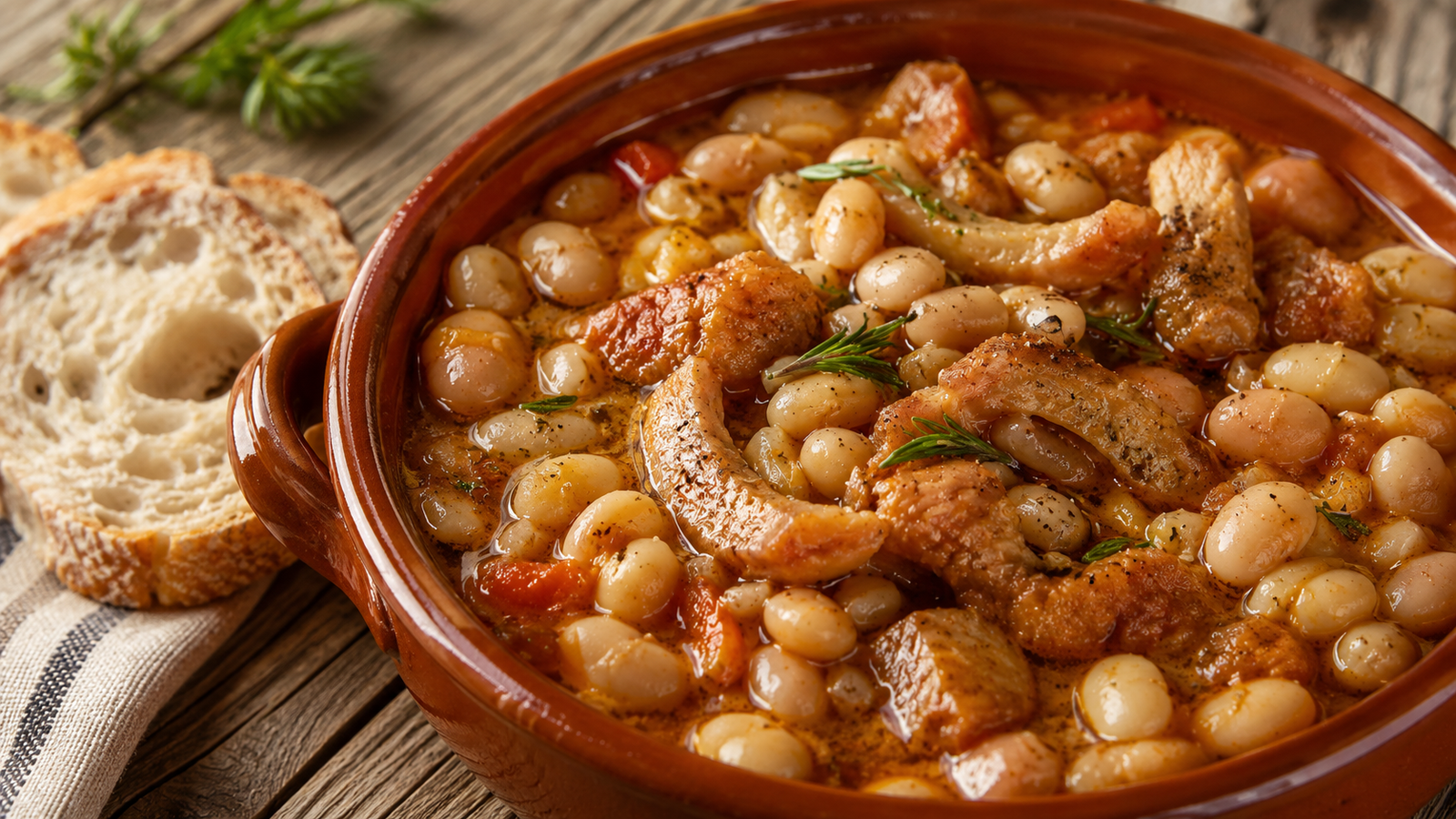
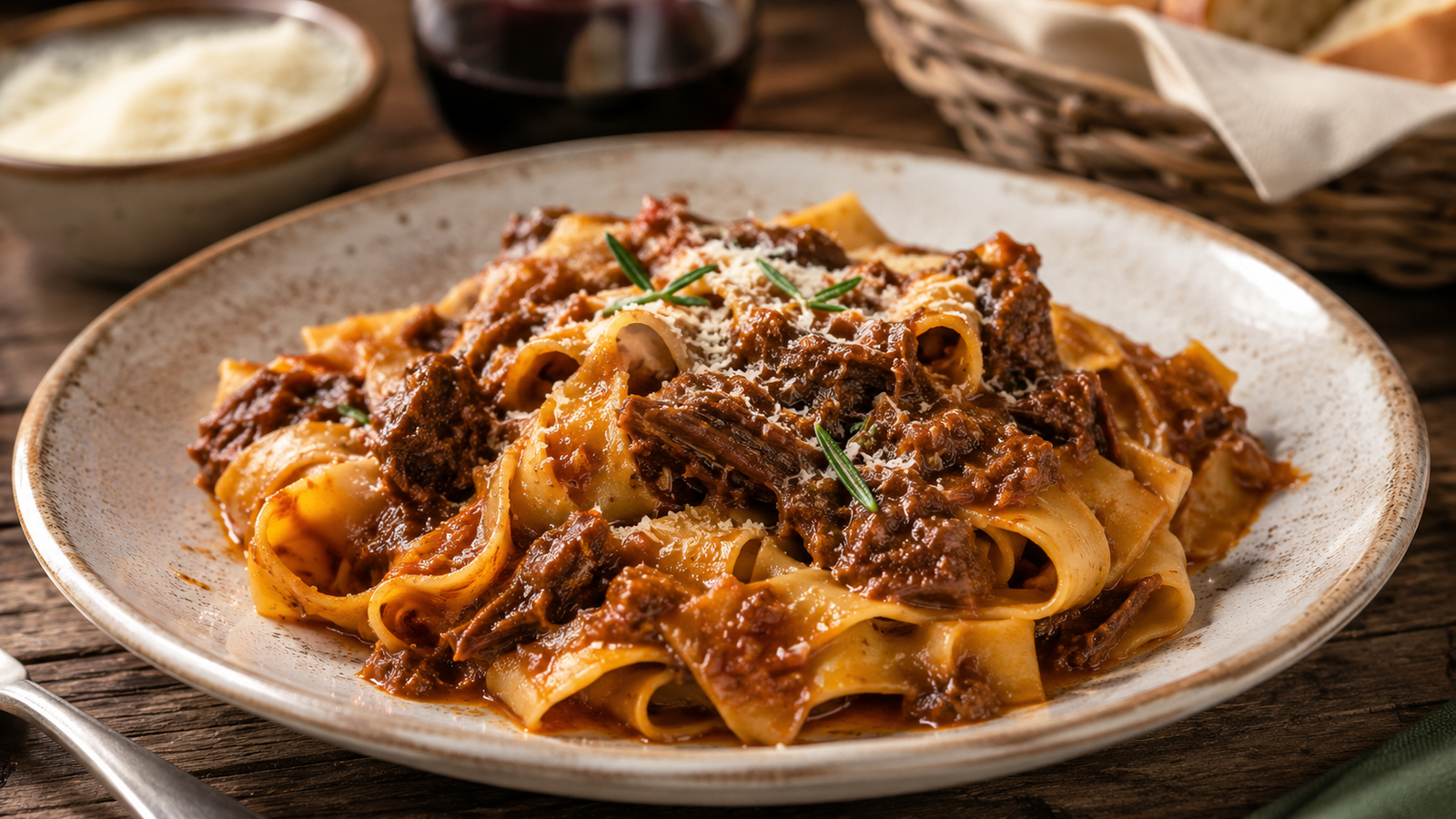
Here the table tastes of festivals, mountains and traditions that endure.
In the village and nearby
Where to eat
A useful, up-to-date selection, ordered by relevance, quality and proximity.
The village in figures
Poggio Bustone,between faith and music
A few essential figures to understand the territory: elevation, population, municipal area and approximate journey time from Rieti.
Elevation
above sea level
Residents
within the municipality
Area
of the municipal area
From Rieti
approximate driving time
In the village and nearby
Where to stay
A useful, up-to-date selection, ordered by relevance, quality and proximity.
FAQ about Poggio Bustone
Six practical answers for planning your visit, finding your way around the village and connecting the day with other places in Sabina.
What should I see in Poggio Bustone?
Visit the Sanctuary of San Giacomo, the Sacro Speco of Saint Francis, the old village and Porta del Buongiorno, Giardini di Marzo dedicated to Lucio Battisti, and the natural area of Monte Rosato with Prati di San Giacomo.
Where is Poggio Bustone?
Poggio Bustone is in the province of Rieti, in the Rieti Plain and Valle Santa. The village stands on the slopes of Monte Rosato and looks down across the Rieti Plain, in a landscape of woodland, meadows and broad mountain views.
How do I get to Poggio Bustone?
The easiest way to reach Poggio Bustone is by car from Rieti, following roads towards the northern side of the Rieti Plain. The historic centre is easy to visit on foot; reaching the Sacro Speco requires continuing along the path above the Sanctuary of San Giacomo.
Why is Poggio Bustone associated with Saint Francis?
Tradition recalls Saint Francis’s arrival in 1208 and his greeting “Good morning, good people!”. The connection lives on in the Sanctuary of San Giacomo, the Sacro Speco and Porta del Buongiorno, one of the village’s most recognisable symbols.
What is the connection between Poggio Bustone and Lucio Battisti?
Lucio Battisti was born in Poggio Bustone in 1943. The village preserves this connection especially at Giardini di Marzo, where the statue of the singer-songwriter with his guitar has become one of its best-known and most photographed images.
What should I eat in Poggio Bustone?
The signature flavour is Porchetta di Poggio Bustone, a major part of local tradition. The area’s cooking also includes rustic dishes such as beans with pork rind and pappardelle with wild boar, connected with country and mountain tables.

From this village a new itinerary begins
After the historic centre, connect your visit with another village, a local place to eat or a walking route and build a complete day in Sabina.