
Sabine Mountains
Poggio Catino
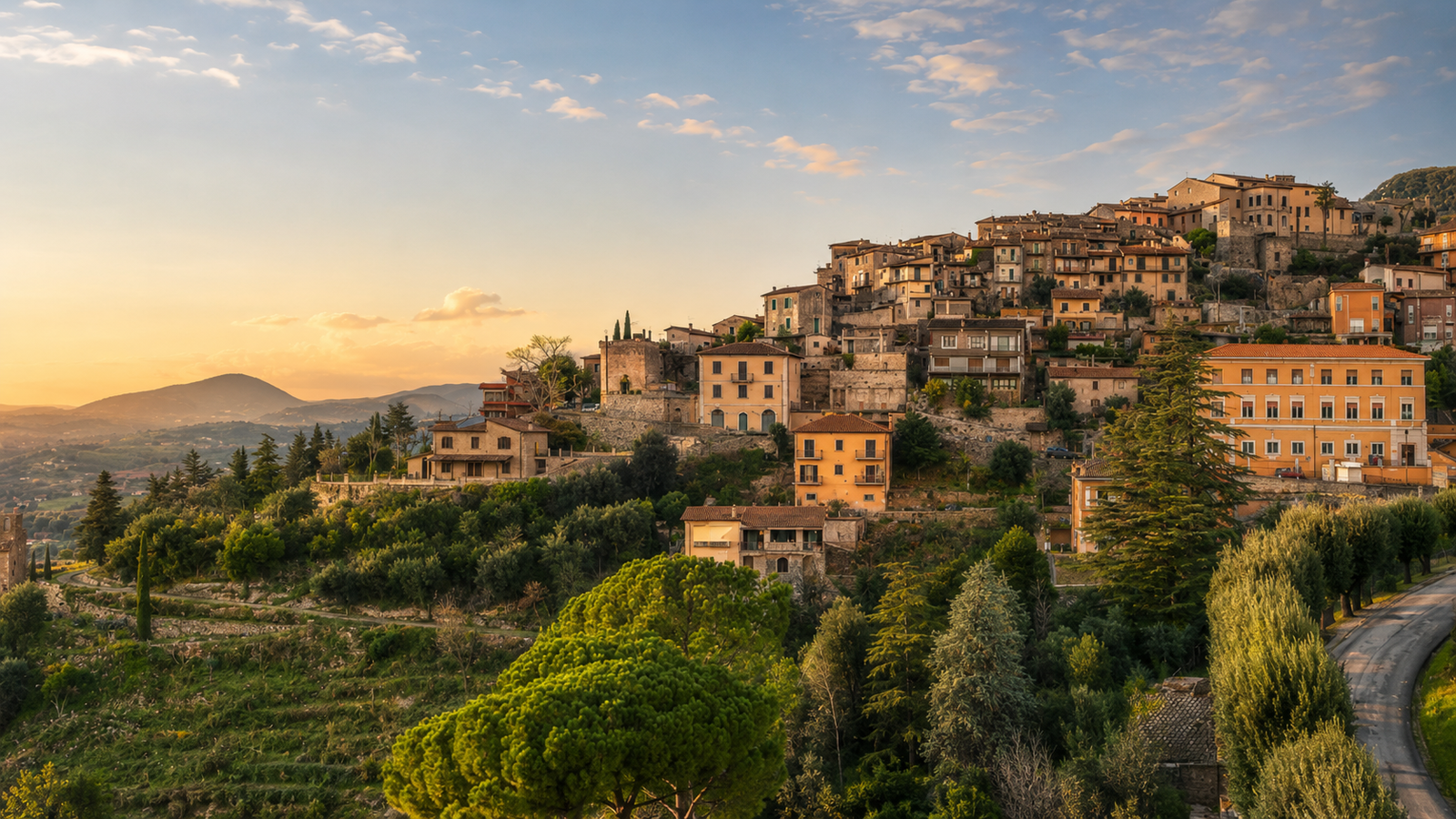
Poggio Catino contains two historic centres, Poggio Catino and Catino, on the slopes of the Sabine Mountains. A Lombard Tower dominates the fortress, a hermitage hides in the rock of Monte Tancia and the Baths of Sulla carry the journey back to Roman times.
Sabine Mountains
Poggio Catinobetween two villages and legends
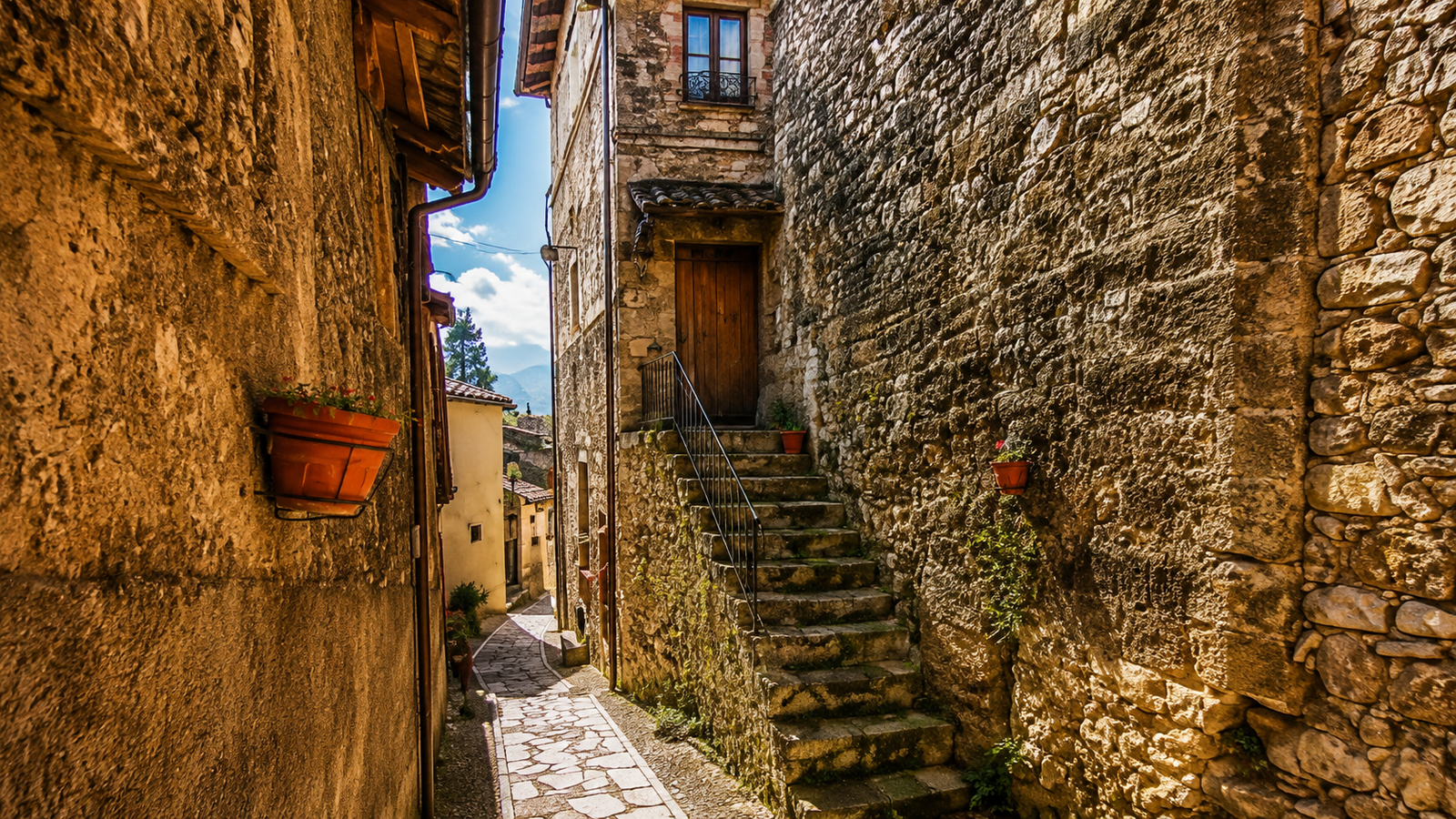
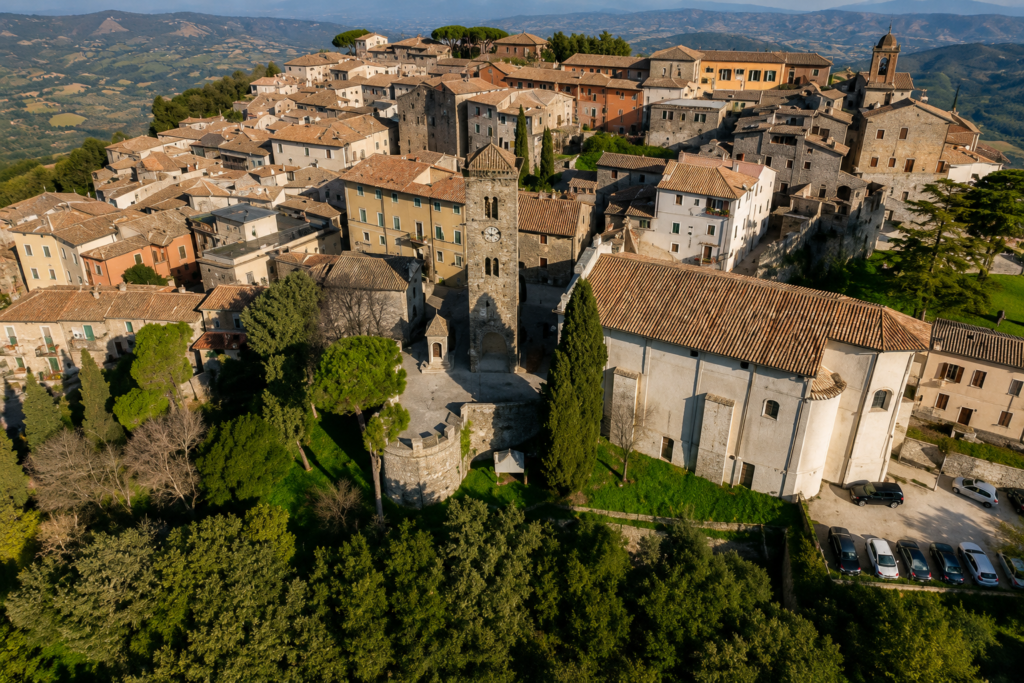
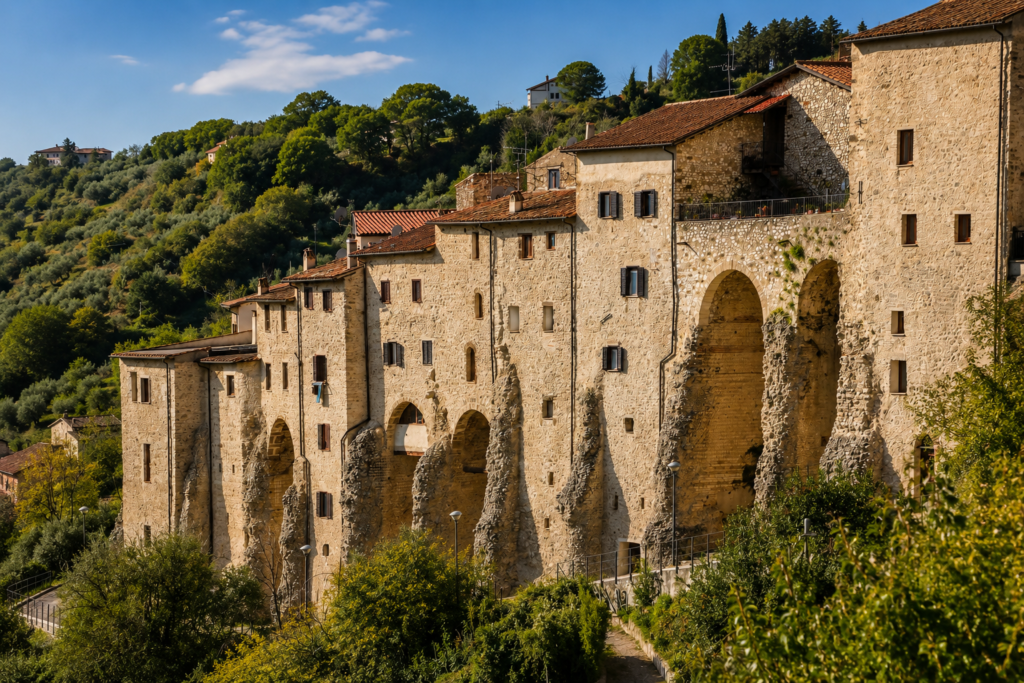
Poggio Catino stands on the foothills of the Sabine Mountains and preserves a rare feature: two distinct historic centres, Poggio Catino and Catino, less than one kilometre apart. The first contains Palazzo Olgiati and the Church of San Rocco; the second preserves the medieval profile of the fortress and Lombard Tower.
The territory extends the story through the Baths of Sulla, evidence of Roman settlement, and the Hermitage of San Michele, carved into the rock and linked with the legend of the dragon of Monte Tancia. The result is an unusual village where archaeology, the Middle Ages, spirituality and popular memory coexist within one journey.
On this page you can
- Discover the two historic centres of Poggio Catino and Catino
- Explore the Lombard Tower, the Hermitage of San Michele and the Baths of Sulla
- Find your way through Roman history, the Middle Ages, legends and local flavours
Two villages
Poggio Catino and Catino preserve two neighbouring but distinct historic centres.
Lombard Tower
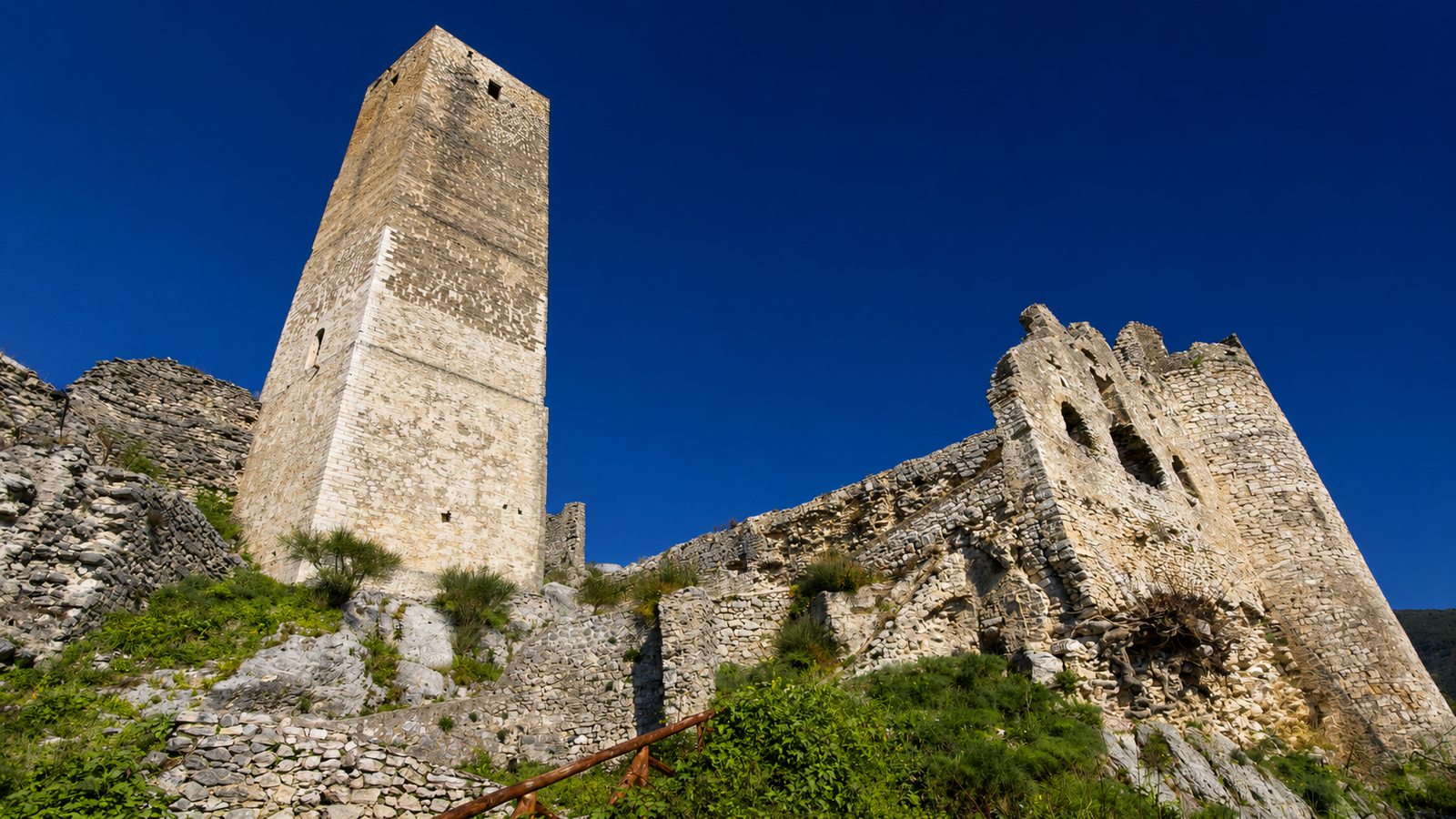
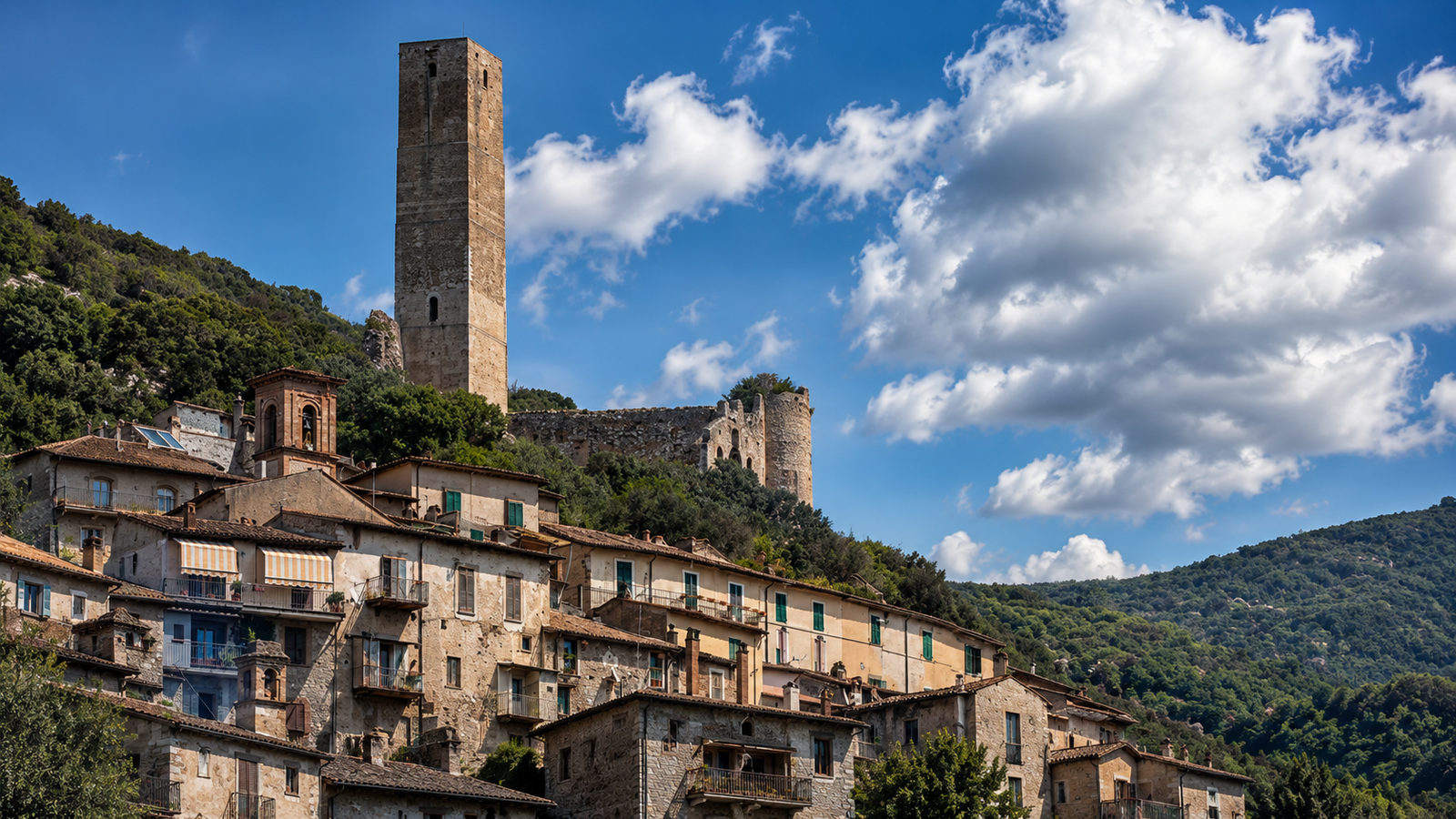
The great tower and fortress dominate the medieval profile of Catino.
Hermitage and dragon
San Michele combines cave, frescoes and one of Sabina’s most evocative legends.
Baths of Sulla
The Roman structures tell a story far older than the two villages.
What to see
Poggio Catinoto discover
Two villages, a tower and a legend
Poggio Catino brings together two distinct historic centres, Poggio Catino and Catino, in a territory where the Middle Ages, archaeology and nature intertwine. The Lombard Tower dominates the Fortress of Catino, the Hermitage of San Michele preserves frescoes and legends in the rock, and the Baths of Sulla reveal the Roman presence.
- The Fortress of Catino and Lombard Tower, among the territory’s strongest landmarks
- The rock-cut Hermitage of San Michele, with frescoes, cave and dragon legend
- The Baths of Sulla and evidence of the ancient Roman presence
- Two distinct historic centres: Poggio Catino and Catino
In the village and nearby
Local producers
A useful, up-to-date selection, ordered by relevance, quality and proximity.
 Olive oil mill
Monteflavio · 23,3 km
Olio di Stanlio
A test entry for a local olive oil mill.
History and identity
Poggio Catino,two villages, one history
The territory of Poggio Catino was already frequented in Roman times, as shown by the structures known as the Baths of Sulla. In later centuries two distinct centres emerged: Catino, gathered beneath the fortress and great tower, and Poggio Catino, developed on the nearby Colle Moricone.
The history of the two villages crossed the Middle Ages and the lordships that alternated in control of the territory. In the 17th century the Olgiati family transformed the palace on the hill into a noble residence; the Lombard Tower, Palazzo Olgiati and ancient walls still recount the different periods of a single identity.
- Two villages
- Lombard Tower
- Olgiati family
In the village and nearby
Local services
A useful, up-to-date selection, ordered by relevance, quality and proximity.
 Technical practice
Montelibretti · 17,9 km
Studio Tecnico Gobbi
Studio Tecnico Gobbi, led by surveyor Stefano Gobbi, is a trusted technical practice in Montelibretti for building design and planning, cadastral and administrative procedures. The practice works on…
Village events calendar
Events in Poggio Catino
Events, festivals and local initiatives selected for Poggio Catino.
Calendar being updated
No events published
New events will be added as soon as they become available.
Browse the full calendar→Authentic flavours
Poggio Catinoscented with cellars
Among olive groves, village festivals and old cellars, Poggio Catino tells of simple, convivial cooking. Panzanella is its most recognisable flavour: bread, tomatoes, olive oil and fresh ingredients transformed into an essential dish scented with summer and tradition.
Alongside panzanella, Sabina PDO olive oil accompanies bruschetta and everyday dishes, while local wine and village cellars recall a tradition of shared tables, local produce and flavours enjoyed without haste.
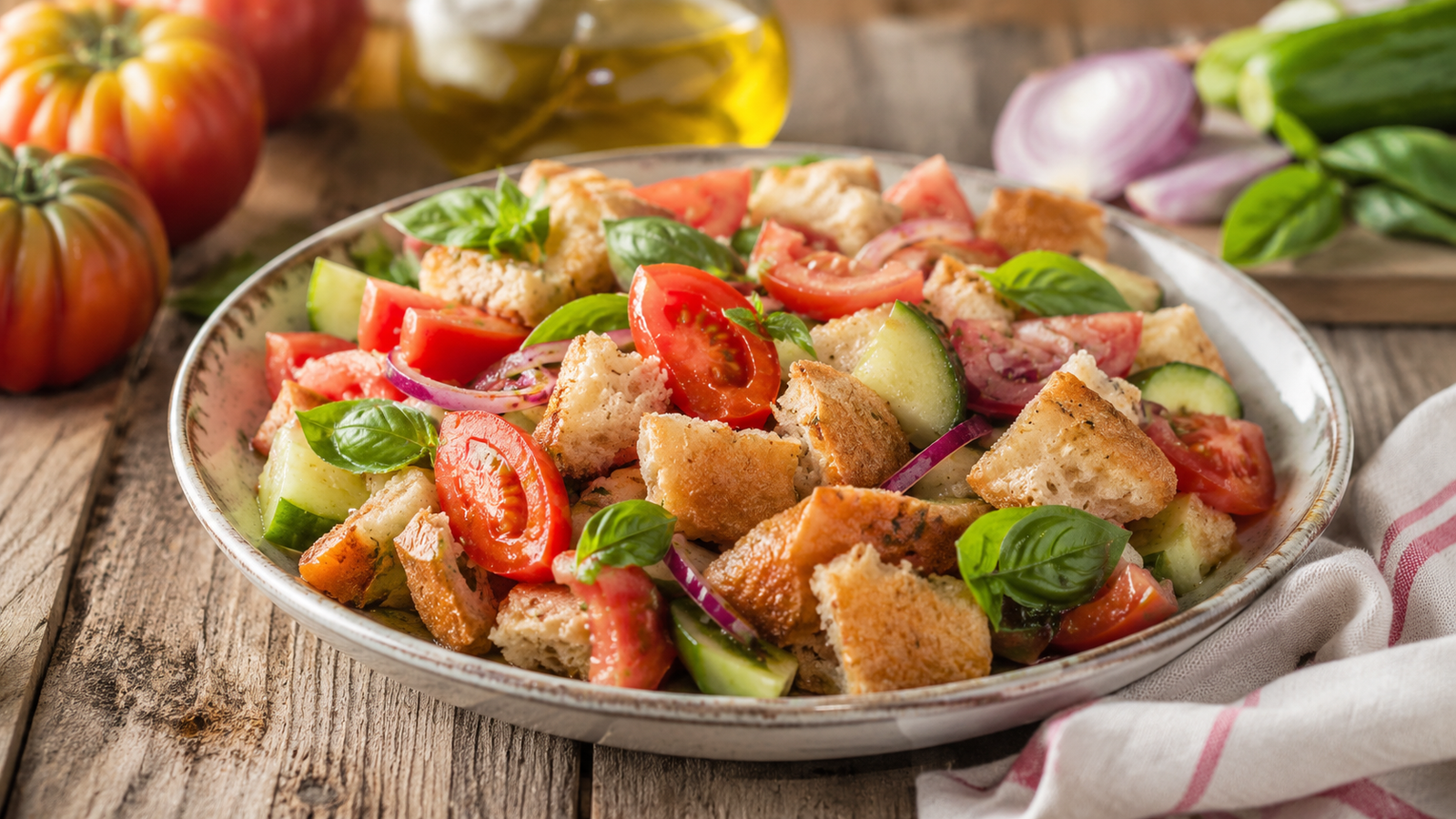
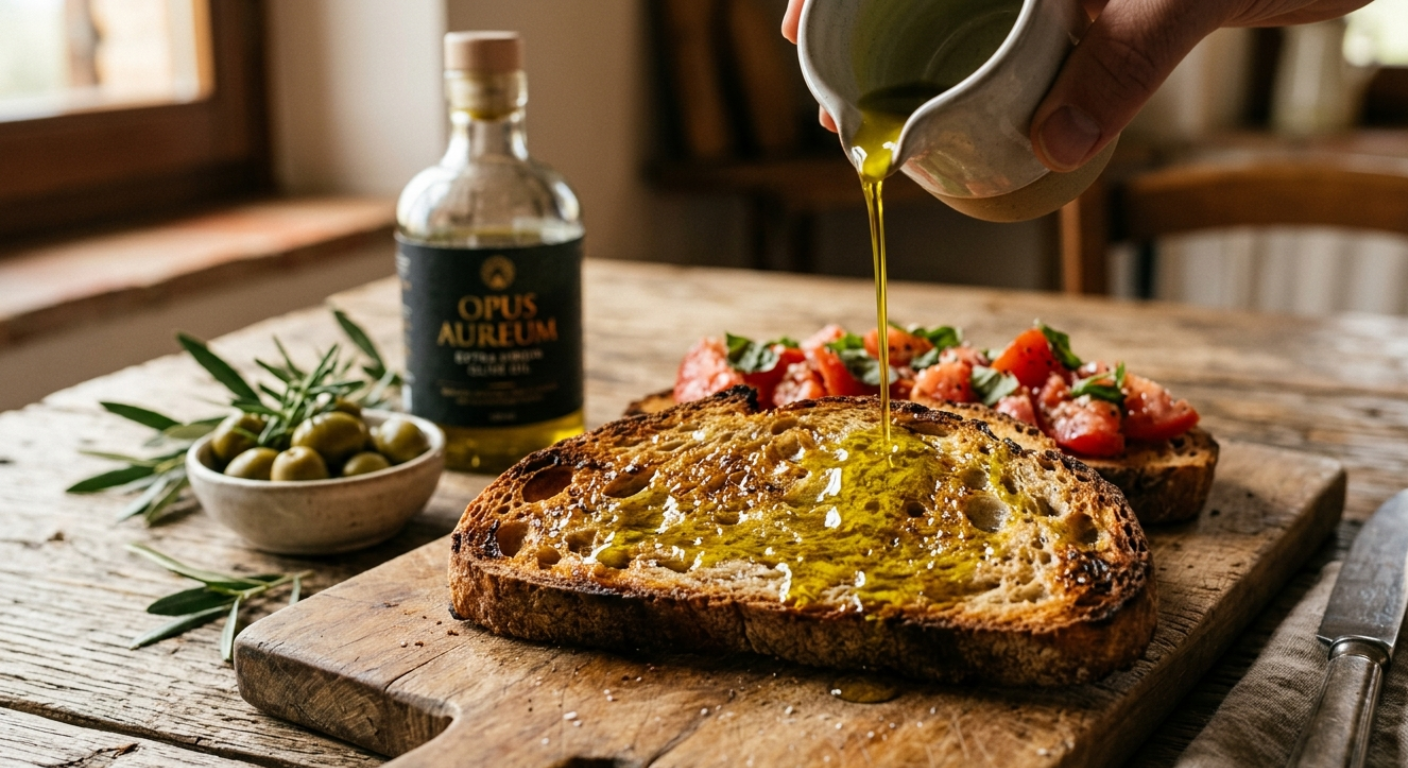
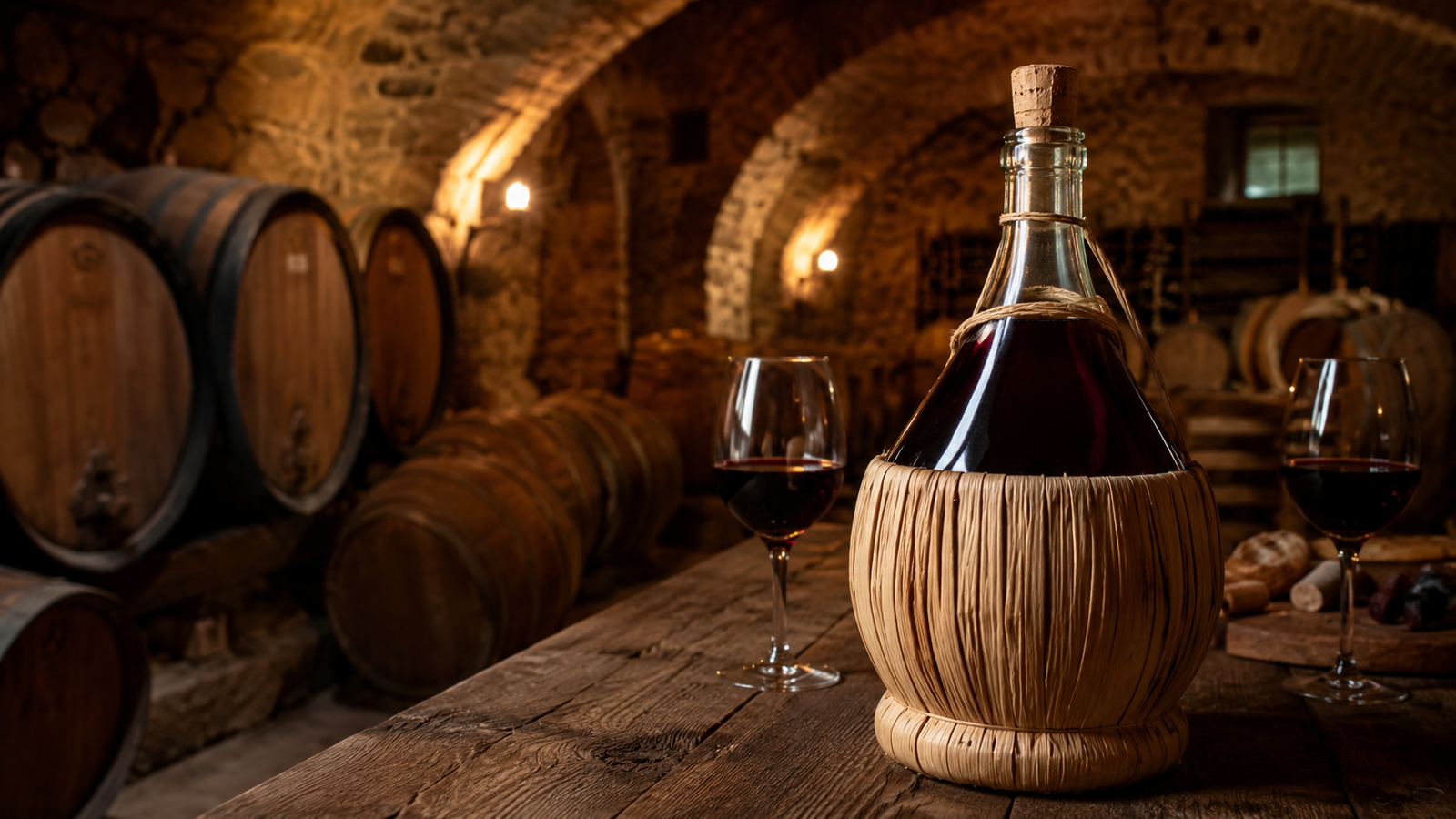
Bread, olive oil and wine: in Poggio Catino, simplicity becomes a memory to share.
In the village and nearby
Where to eat
A useful, up-to-date selection, ordered by relevance, quality and proximity.
 Bar / Café
Montelibretti · 17,9 km
Bar Test 01
A welcoming meeting place in the heart of Sabina, ideal for a leisurely breakfast, a quick coffee or an aperitivo after a walk through historic lanes, scenic views…
 Restaurant
Monteflavio · 23,3 km
Pala del Palo
A test entry for a local restaurant.
Pizzeria
Castel di Tora · 23,6 km
Pizzeria Test 02
Pizza is always a delight, especially when it is made in the Neapolitan style.
The village in figures
Poggio Catino,between two villages and history
A few essential figures for understanding the territory: elevation, residents, municipal area and approximate travel time from Rieti.
Elevation
above sea level
Residents
within the municipality
Area
of the municipal area
From Rieti
approximate driving time
In the village and nearby
Where to stay
A useful, up-to-date selection, ordered by relevance, quality and proximity.
 Hotel
Hotel
Monteflavio · 23,3 km
Hotel Villa Prova
A test hotel entry.
FAQ about Poggio Catino
Six practical answers for planning your visit, finding your way around the village and connecting the day with other places in Sabina.
What should you see in Poggio Catino?
The main places are Catino with its fortress and Lombard Tower, the Hermitage of San Michele, the Baths of Sulla, Palazzo Olgiati and the Church of San Rocco in the Poggio Catino centre.
Why does Poggio Catino have two villages?
The municipality includes two nearby but distinct historic centres: Catino, dominated by the fortress and tower, and Poggio Catino, developed on the neighbouring Colle Moricone. The visit is rewarding precisely because it reveals two different atmospheres within the same territory.
How do you get to Poggio Catino?
The easiest way to reach Poggio Catino is by car. Once there, allow separate time for Poggio Catino and Catino, which stand only a short distance apart.
What is the dragon legend of Poggio Catino?
Local tradition connects the cave of the Hermitage of San Michele with the legend of a dragon defeated by Saint Sylvester. The story adds a powerful popular and symbolic dimension to the rock-cut sanctuary.
What are the Baths of Sulla?
The Baths of Sulla are a Roman archaeological complex near the village. Their traditional name recalls Sulla, although a direct attribution to the historical figure is not considered certain.
What should you eat in Poggio Catino?
The principal flavour is Poggio Catino panzanella. The local table also features Sabina PDO olive oil on bruschetta and the tradition of wine and ancient cellars.

From this village a new itinerary begins
After the historic centre, connect your visit with another village, a local place to eat or a walking route and build a complete day in Sabina.