

Central Sabina
Poggio San Lorenzo
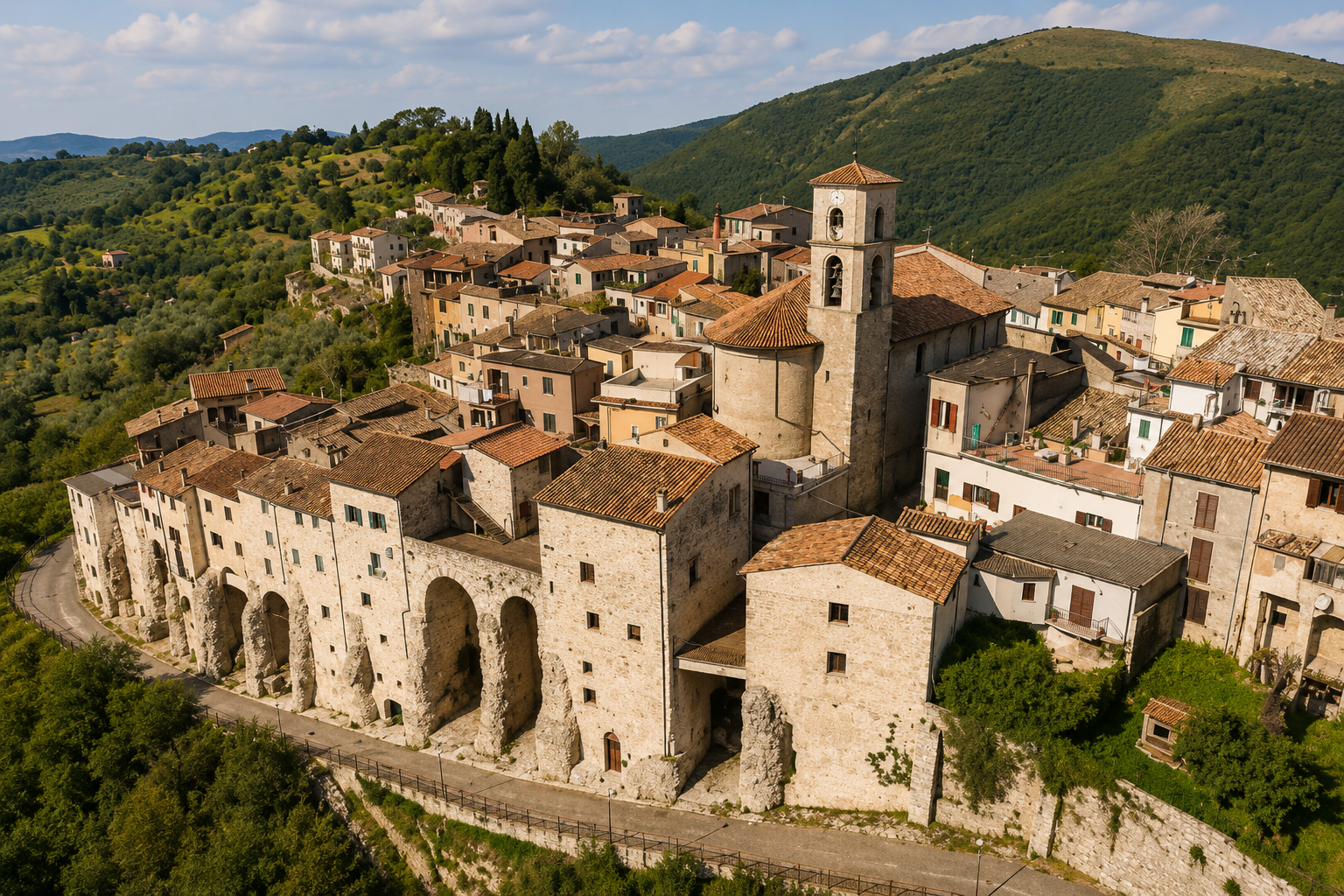
Poggio San Lorenzo stretches along a ridge of Central Sabina, where the medieval village preserves one of its most surprising traces: massive walls connected with an ancient Roman garrison along the Salt Road. Among olive terraces, churches, mills and monumental trees, the village combines archaeology, landscape and a local cuisine with a pasta shape of its own.
Central Sabina
Poggio San Lorenzothe village built on the walls
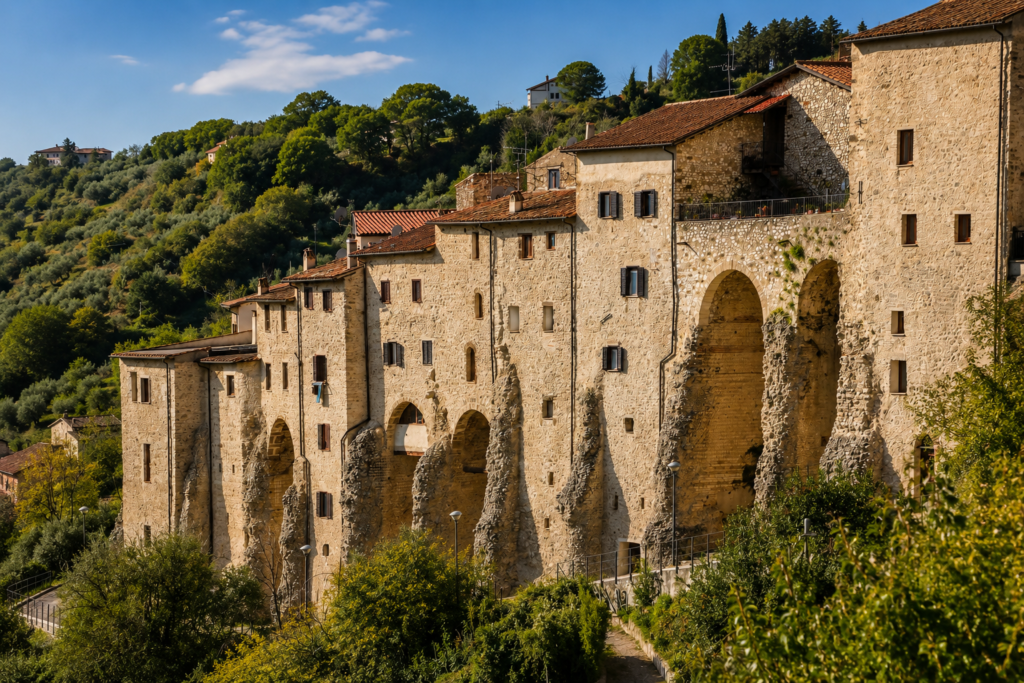
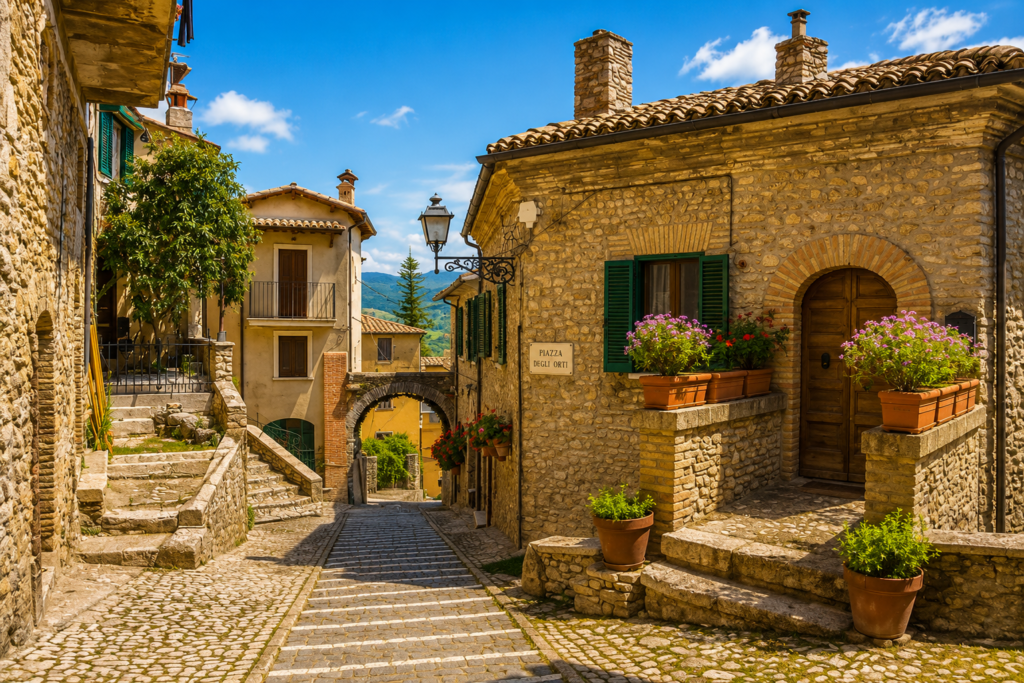
At Poggio San Lorenzo history is not hidden beneath the village: it becomes part of its form. The centre develops along a ridge and preserves large masonry structures connected with the Roman garrison controlling the ancient Salt Road, later reused as the medieval village expanded.
From here the visit constantly changes register. It moves from wall arches to the Church of San Lorenzo Martire, from the historic olive mill to the caves of Madonna dei Penitenti, then to Valle Gemma and its centuries-old holm oak. At the table, Piringhilli return the story to village kitchens.
On this page you can
- Follow the traces of the Roman castrum within the structure of the village itself
- Discover churches, caves, the historic olive mill and the great holm oak of Valle Gemma
- Find your way through Piringhilli, Frittelli, truffle dishes, hospitality and nearby stops
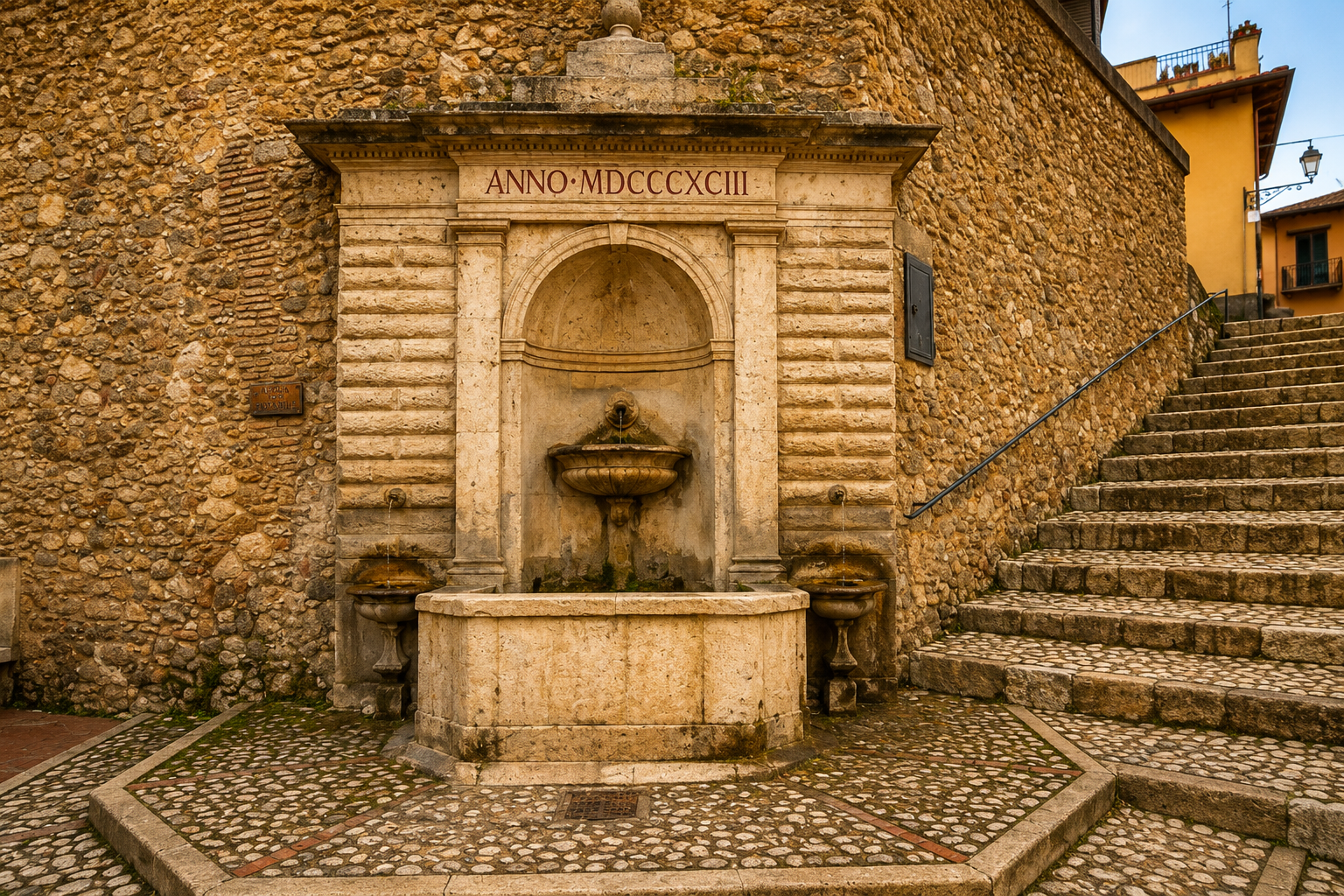

Roman walls
Great arches and masonry recall the ancient garrison along the Salt Road.
Salt Road
The village’s position is connected with the historic Sabina route and the nearby Via Salaria.
Valle Gemma
The centuries-old holm oak takes the visit beyond the centre to one of the territory’s natural symbols.
Way of Saint Francis
A stage of the route arrives here from Rieti, placing the village within the network of Franciscan paths.
What to see
ExplorePoggio San Lorenzo
Ancient walls, olive trees and timeless places
Poggio San Lorenzo is recognised by its great walls, which surround a compact historic centre and reveal the long transition from Roman times to the medieval village. The visit continues through the main church, the small Madonna dei Penitenti sanctuary with nearby caves, the old olive mill and the monumental nature of Valle Gemma, dominated by a centuries-old holm oak that has become one of the territory’s symbols.
- The monumental walls and ancient village, the country’s most recognisable face
- Madonna dei Penitenti and the caves, between devotion and local history
- The historic olive mill, a tangible memory of olive-oil culture
- The centuries-old holm oak of Valle Gemma and the Church of San Lorenzo Martire
In the village and nearby
Local producers
A useful, up-to-date selection, ordered by relevance, quality and proximity.
 Olive oil mill
Monteflavio · 16,1 km
Olio di Stanlio
A test entry for a local olive oil mill.
History and identity
From the Roman castrumto the village of San Lorenzo
The position of Poggio San Lorenzo explains its past. On the hill, along the Salt Road, stood a Roman garrison controlling movement through the territory. The large walls still visible, including sections in opus reticulatum, are the clearest trace of this phase and continue to define the village skyline.
In the Middle Ages the settlement consolidated along the ridge, also receiving people from nearby Capofarfa, and gradually adopted an identity connected with San Lorenzo. The church dedicated to the patron saint, fortified structures and linear urban fabric reveal this transformation: a place founded to control an ancient road and later becoming a small village of olive groves, worship and community life.
- Roman castrum · Salt Road
- Medieval village · 12th century
- San Lorenzo · patron saint
In the village and nearby
Local services
A useful, up-to-date selection, ordered by relevance, quality and proximity.
 Pharmacy
Featured
Pharmacy
Featured Ascrea · 13,8 km
Test
This is a test entry for a local pharmacy.
 Technical practice
Montelibretti · 15,8 km
Studio Tecnico Gobbi
Studio Tecnico Gobbi, led by surveyor Stefano Gobbi, is a trusted technical practice in Montelibretti for building design and planning, cadastral and administrative procedures. The practice works on…
Village events calendar
Events in Poggio San Lorenzo
Events, festivals and local initiatives selected for Poggio San Lorenzo.
Calendar being updated
No events published
New events will be added as soon as they become available.
Browse the full calendar→Village flavours
Poggio San Lorenzopiringhilli, frittelli and truffle
At Poggio San Lorenzo the dish immediately defining local cooking is Piringhilli.
Alongside Piringhilli come Frittelli.
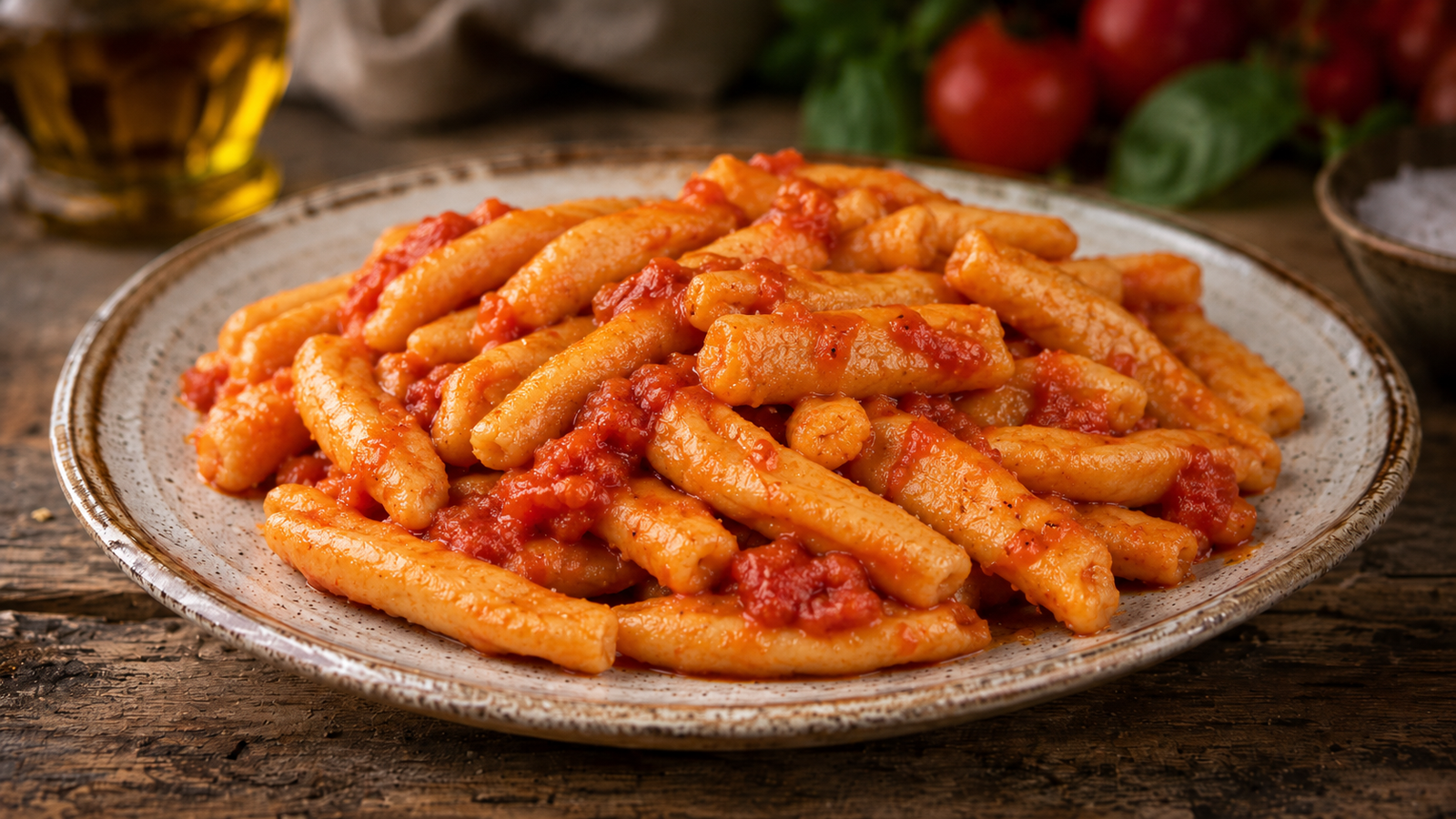
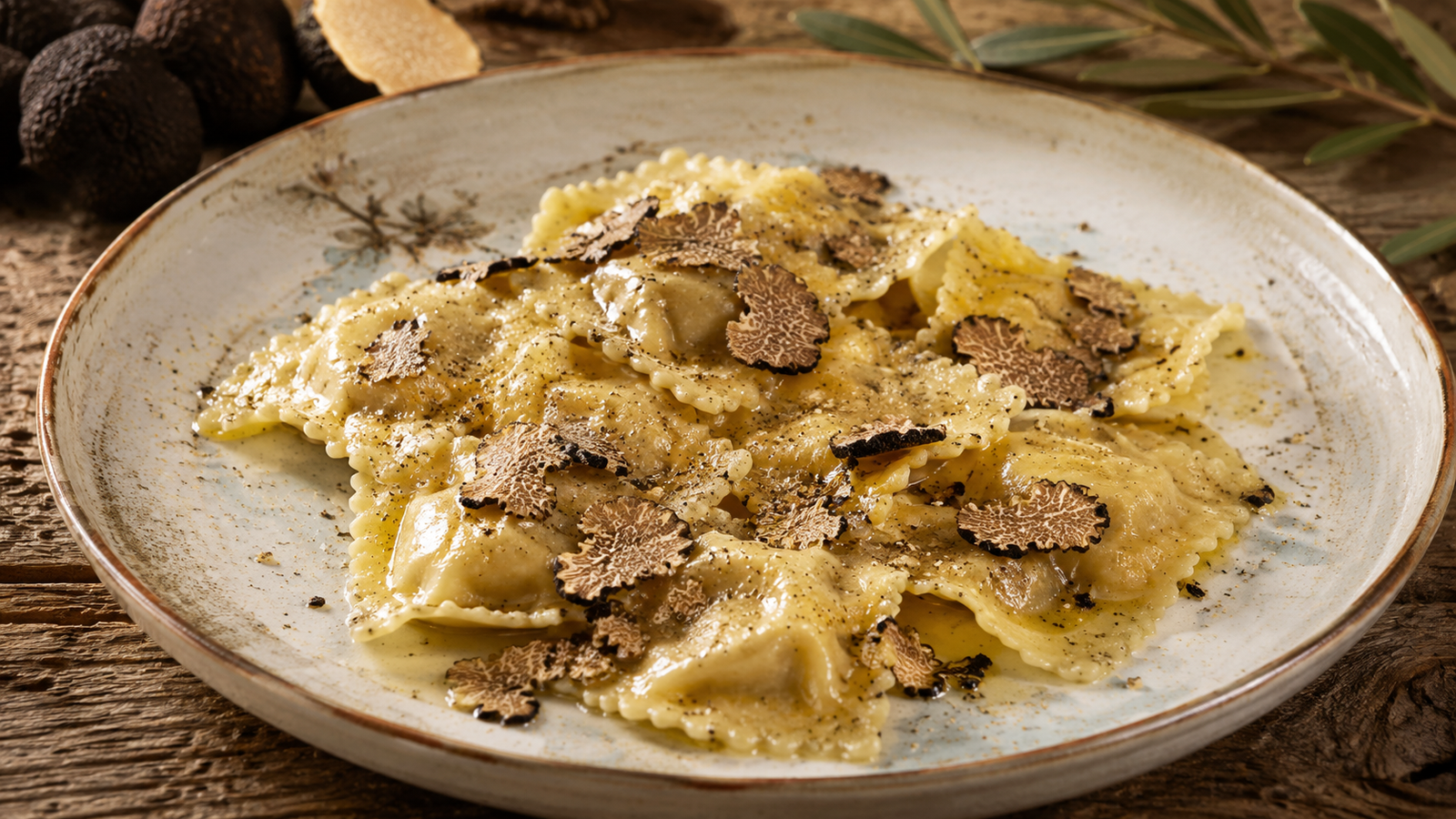

Here tradition has a precise shape: hand-rolled pasta, festive fried food and the aroma of truffle.
In the village and nearby
Where to eat
A useful, up-to-date selection, ordered by relevance, quality and proximity.
Bar / Café
Montelibretti · 15,8 km
Bar Test 01
A welcoming meeting place in the heart of Sabina, ideal for a leisurely breakfast, a quick coffee or an aperitivo after a walk through historic lanes, scenic views…
 Restaurant
Monteflavio · 16,1 km
Pala del Palo
A test entry for a local restaurant.
Pizzeria
Castel di Tora · 10,7 km
Pizzeria Test 02
Pizza is always a delight, especially when it is made in the Neapolitan style.
The village in figures
Poggio San Lorenzobetween ridge, olive groves and the Via Salaria
A hill elevation, just over five hundred residents and a compact territory close to the Via Salaria. Poggio San Lorenzo’s figures explain its position well: a small Sabina municipality whose history developed along one of central Italy’s great communication routes.
Elevation
on the ridge of Central Sabina
Residents
resident population on 1 January 2026
Area
between olive groves, woodland and valley
From the Via Salaria
the major route close to the village
In the village and nearby
Where to stay
A useful, up-to-date selection, ordered by relevance, quality and proximity.
 Hotel
Hotel
Monteflavio · 16,1 km
Hotel Villa Prova
A test hotel entry.
FAQ about Poggio San Lorenzo
Six practical answers for planning your visit, finding your way around the village and connecting the day with other places in Sabina.
What should I see in Poggio San Lorenzo?
Main stops are the monumental walls and ancient village, Madonna dei Penitenti with its caves, the historic olive mill, the centuries-old holm oak of Valle Gemma and the Church of San Lorenzo Martire. Within a few stops the village combines archaeology, devotion, olive oil and nature.
Why are the walls of Poggio San Lorenzo so important?
The walls are connected with an ancient Roman garrison along the Salt Road. The large sections still visible, including opus reticulatum masonry, belong to a phase earlier than the medieval village and make the wall system the village’s clearest historical landmark.
Where is Poggio San Lorenzo?
Poggio San Lorenzo is in the province of Rieti, in Central Sabina, at about 498 metres above sea level. The village stands close to the Via Salaria in a transitional position between Rieti and the Sabina hills.
How do I reach and visit Poggio San Lorenzo?
The village lies a short distance from the Via Salaria and is easy to reach by car. The historic centre is explored on foot; Valle Gemma, the centuries-old holm oak and other sites outside the settlement are reached along local roads.
What are Piringhilli?
Piringhilli are the village’s most distinctive pasta. They are handmade pieces, short but robust, thick and slightly irregular. In Sabina dialect the name refers precisely to something short. The traditional sauce uses tomato, garlic, extra virgin olive oil and chilli.
Is Poggio San Lorenzo a stage of the Way of Saint Francis?
Yes. Poggio San Lorenzo lies on the Sabina route of the Way of Saint Francis: one stage arrives from Rieti and ends in the village, while the route then continues towards Monteleone Sabino and Ponticelli di Scandriglia.

From this village a new itinerary begins
After the historic centre, connect your visit with another village, a local place to eat or a walking route and build a complete day in Sabina.