
Roman Sabina
Sant’Angelo Romano
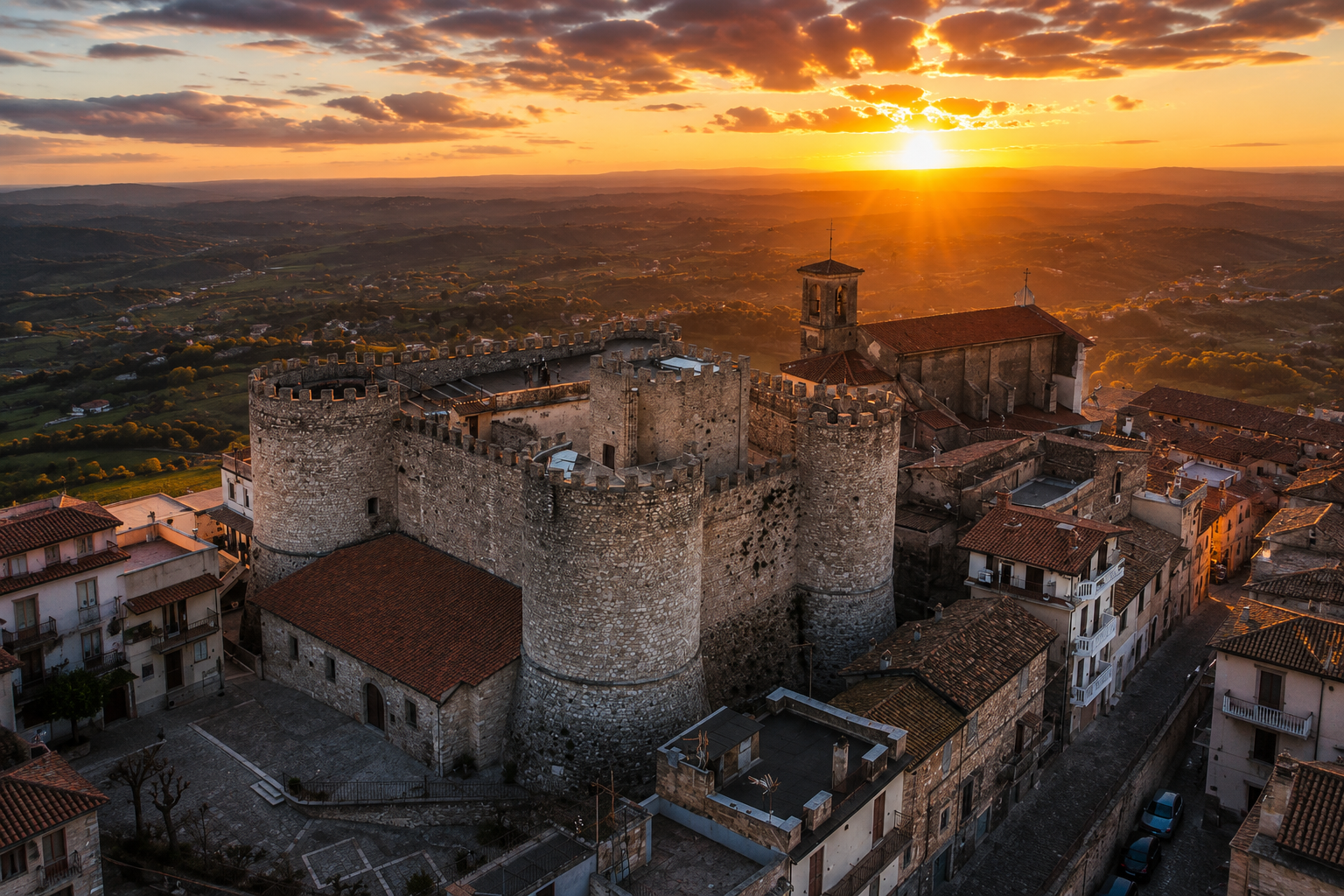
Sant’Angelo Romano is a Roman Sabina village perched on Monte Patulo, between the Cornicolani Mountains and the Tiber Valley. It preserves the historic profile of Orsini-Cesi Castle, now home to the Prehistoric Museum of the Tiber-Cornicolani Territory, and opens towards the Macchia di Gattaceca and Macchia del Barco Nature Reserve.
Roman Sabina
Sant’Angelo Romanobetween castle and nature
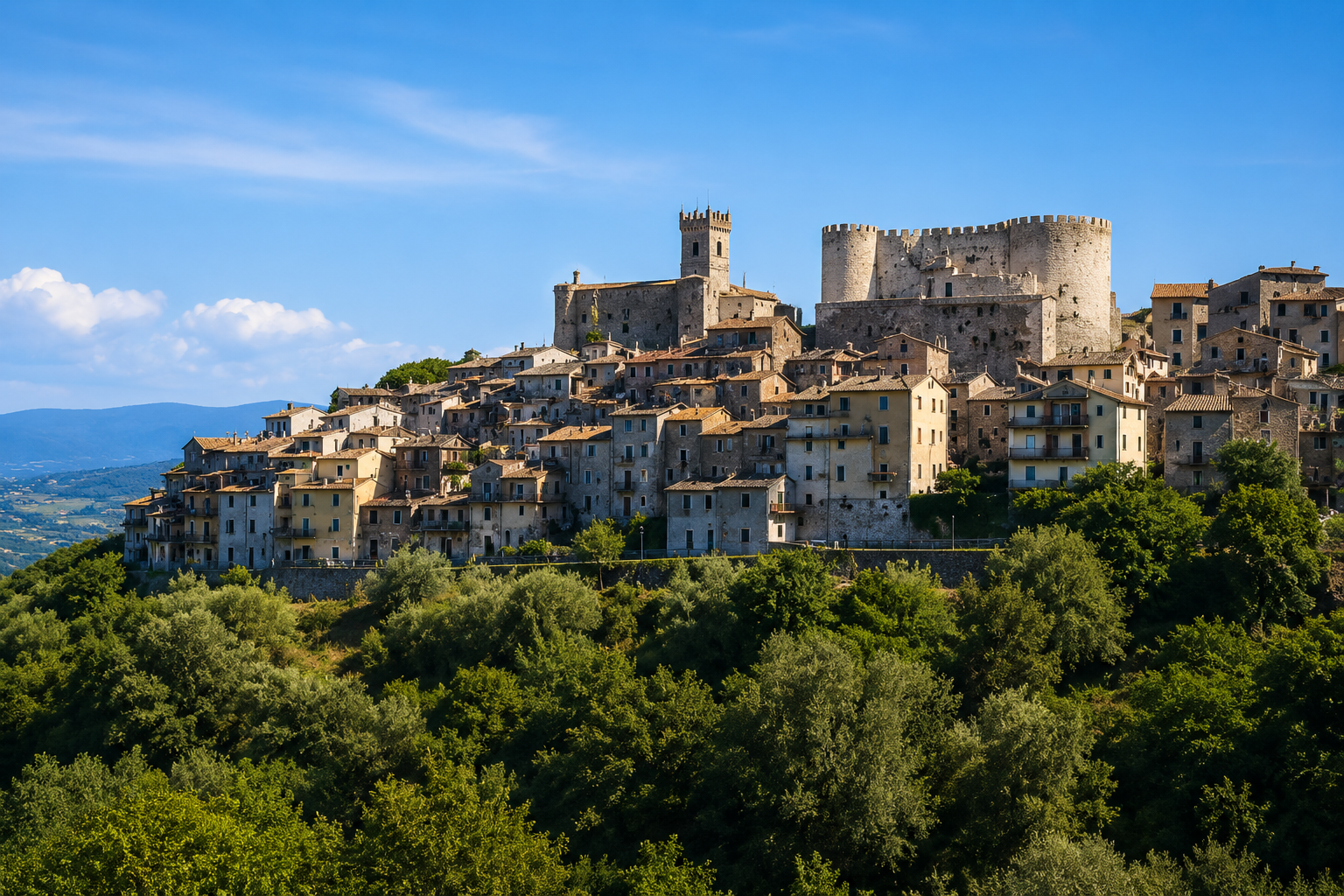
Sant’Angelo Romano is a Roman Sabina village perched on Monte Patulo, a height in the Cornicolani Mountains. Its compact and recognisable profile is dominated by Orsini-Cesi Castle, the historic landmark of the old centre and the territory’s noble memory.
Its identity combines history, archaeology and landscape. The castle houses the Prehistoric Museum of the Tiber-Cornicolani Territory, while beyond the village lies the Macchia di Gattaceca and Macchia del Barco Nature Reserve, with woodlands, trails and karst environments revealing the area’s natural side.
On this page you can
- Discover Orsini-Cesi Castle and the historic centre of Sant’Angelo Romano
- Learn about the Prehistoric Museum and its connection with the Tiber-Cornicolani territory
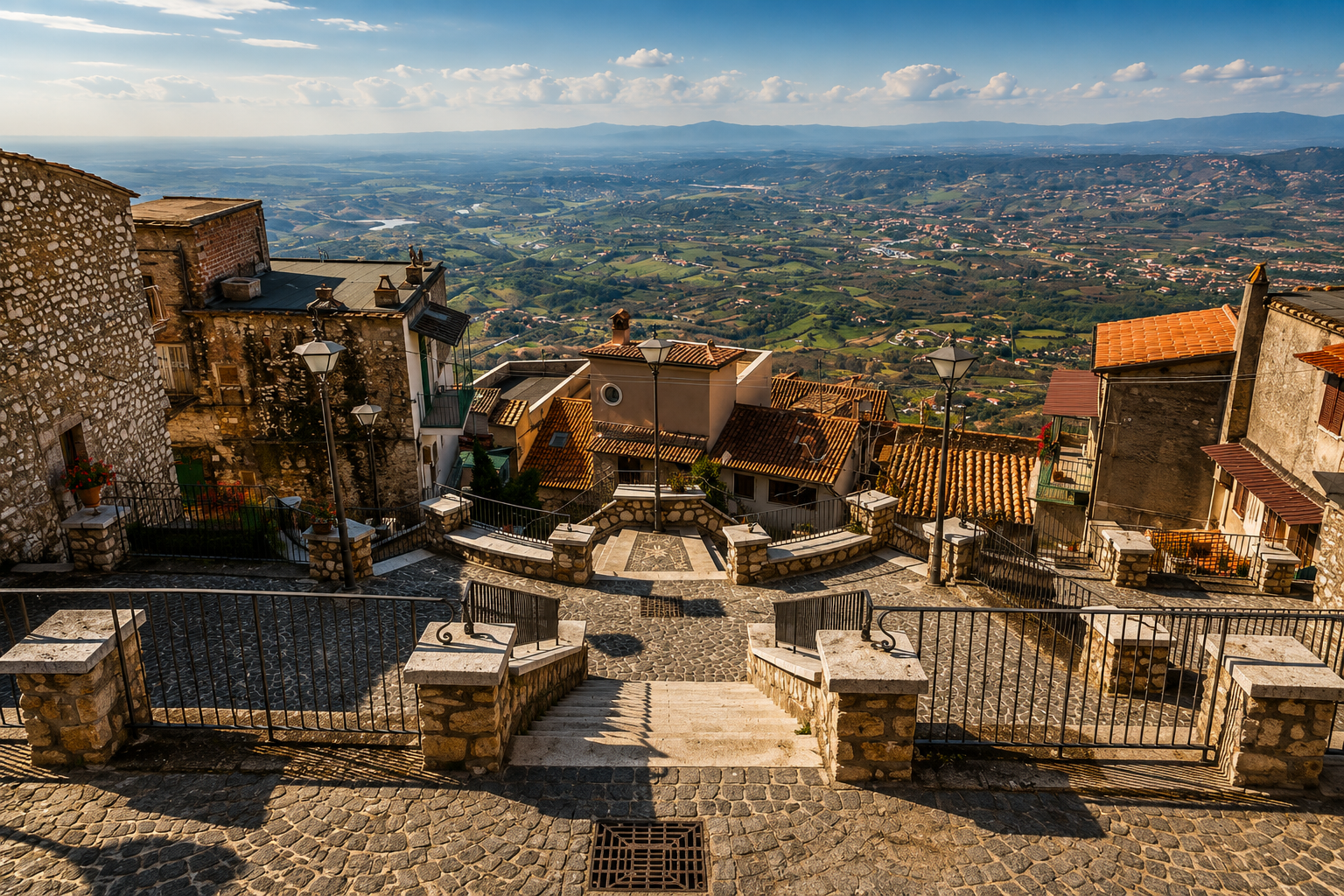
- Find your way among Monte Patulo, the Cornicolani Mountains and Macchia di Gattaceca

Orsini-Cesi Castle
The village’s historic symbol, founded as a fortress and transformed into a fortified castle.
Prehistoric Museum
A museum inside the castle devoted to the prehistory of the Tiber-Cornicolani territory.
Monte Patulo
The height in the Cornicolani Mountains on which the old village developed.
Macchia di Gattaceca
The nature reserve extending the territory into woodlands, trails and karst environments.
What to see
Sant’Angeloto discover
Castle, museum and karst nature
Sant’Angelo Romano is a Roman Sabina village developed on Monte Patulo in the Cornicolani Mountains. The historic centre revolves around Orsini-Cesi Castle, now home to the Prehistoric Museum of the Tiber-Cornicolani Territory, while the surrounding area opens towards the Macchia di Gattaceca and Macchia del Barco Nature Reserve, among woodlands, caves and karst scenery.
- Orsini-Cesi Castle, historic symbol of the village and old centre
- Prehistoric Museum devoted to the Tiber-Cornicolani territory
- Church of Santa Liberata, part of the village’s religious and community memory
- Macchia di Gattaceca, Bosco di Nardi and landscapes of the Cornicolani Mountains
In the village and nearby
Local producers
A useful, up-to-date selection, ordered by relevance, quality and proximity.
History and identity
From Orsini-Cesi Castleto Macchia di Gattaceca
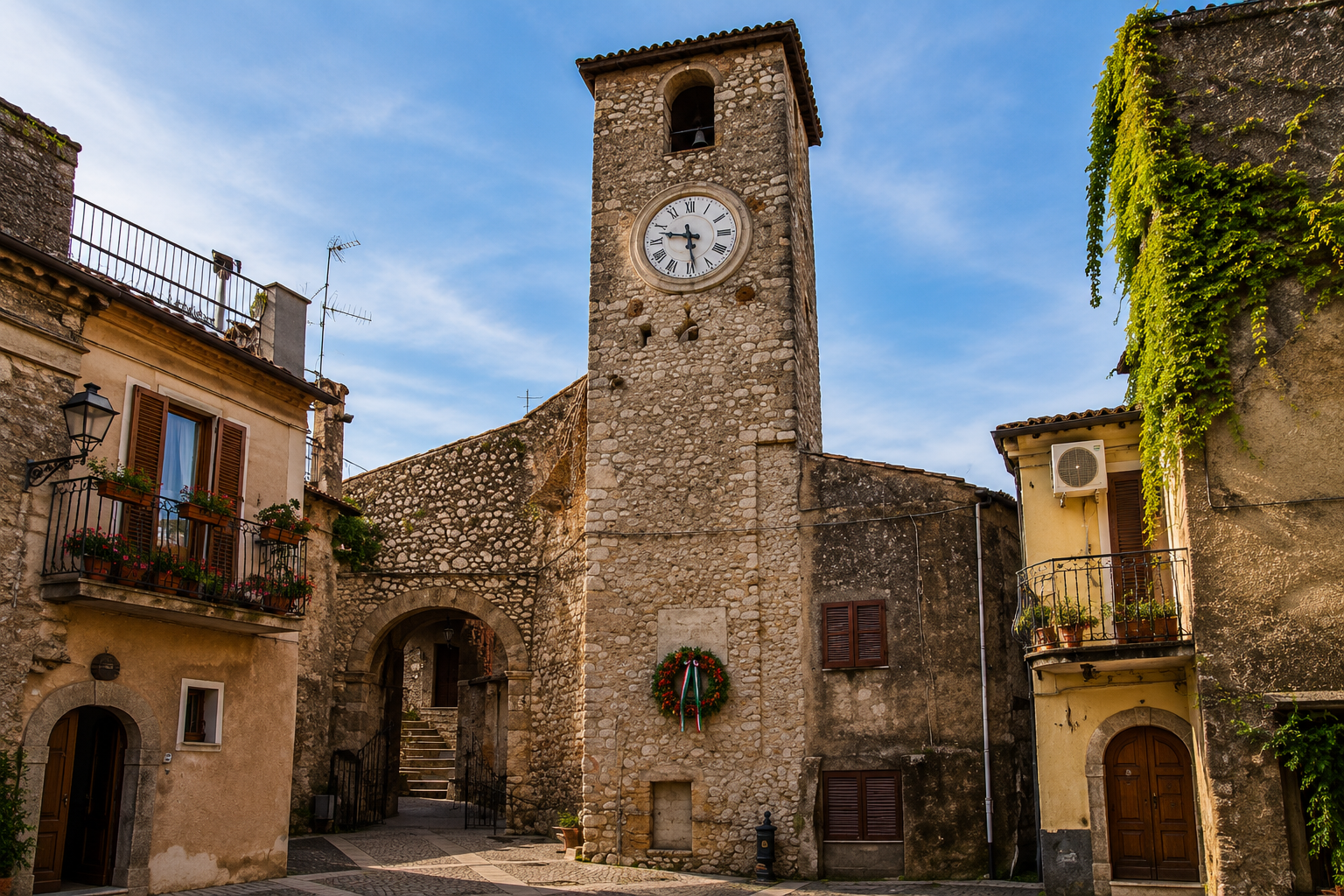
Sant’Angelo Romano developed on Monte Patulo, a height in the Cornicolani Mountains whose position shaped the form and history of the village. The old centre’s most recognisable landmark is Orsini-Cesi Castle, founded as a fortified stronghold and gradually transformed into a symbol of the community.
Today the castle also houses the Prehistoric Museum of the Tiber-Cornicolani Territory, connecting the village with the area’s most ancient history. Beyond the settlement, the Macchia di Gattaceca and Macchia del Barco Nature Reserve, including Bosco di Nardi and its karst environments, reveals Sant’Angelo Romano’s natural character through woodlands, caves, trails and Cornicolani landscapes.
- Orsini-Cesi Castle
- Prehistoric Museum
- Monte Patulo
- Macchia di Gattaceca
In the village and nearby
Local services
A useful, up-to-date selection, ordered by relevance, quality and proximity.
Village not found
Check the village name entered in the events shortcode.
Authentic flavours
Sant’Angeloat the table
Through baked recipes, popular dishes and village festivals, Sant’Angelo Romano preserves a simple and practical cuisine rooted in family tradition.
Sant’Angelo Romano’s ciammelle, beans with pork rind and fried pizza reveal the village’s most convivial side: rustic flavours, genuine preparations and dishes belonging to everyday memory and local festivals.
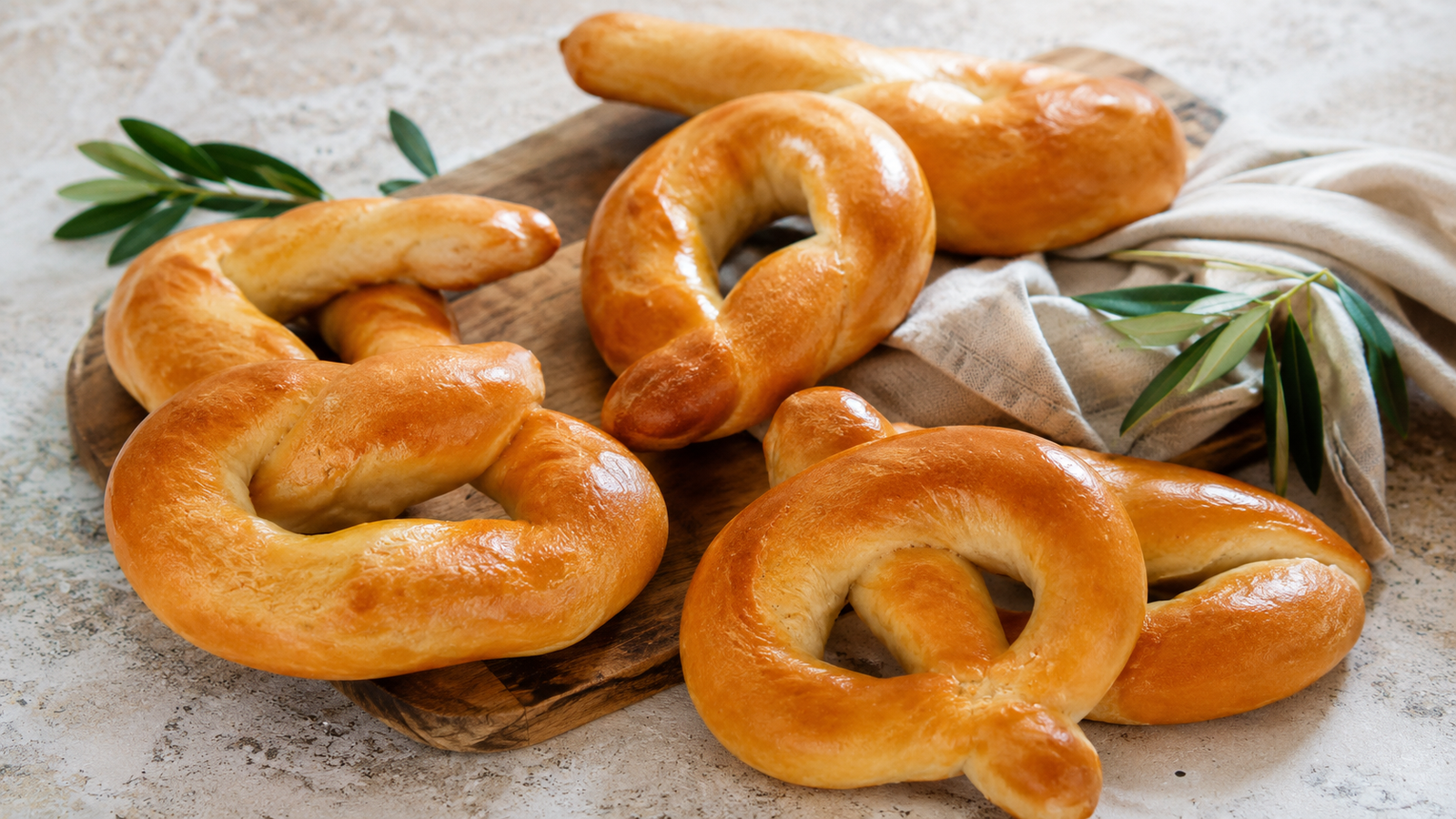
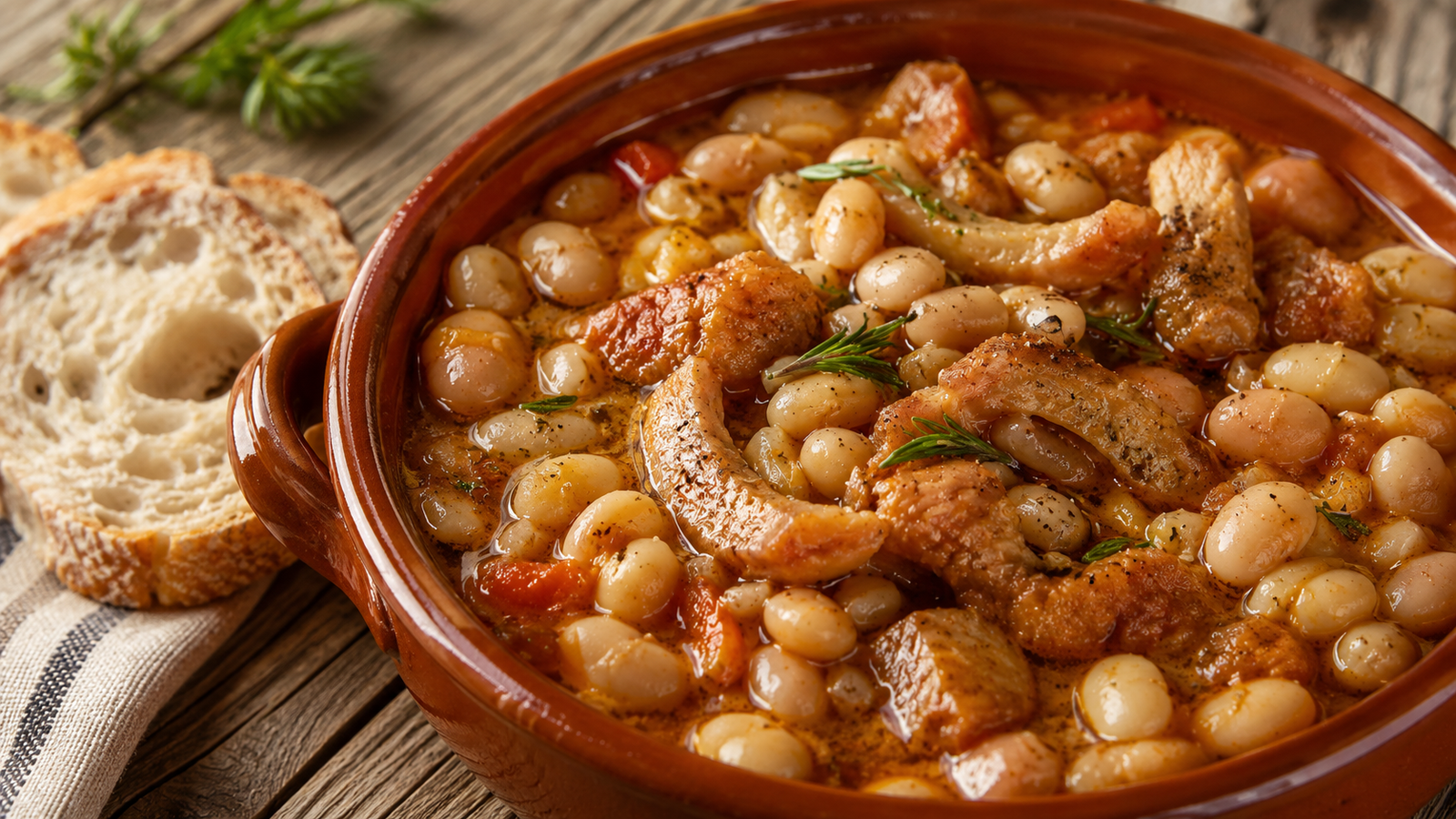
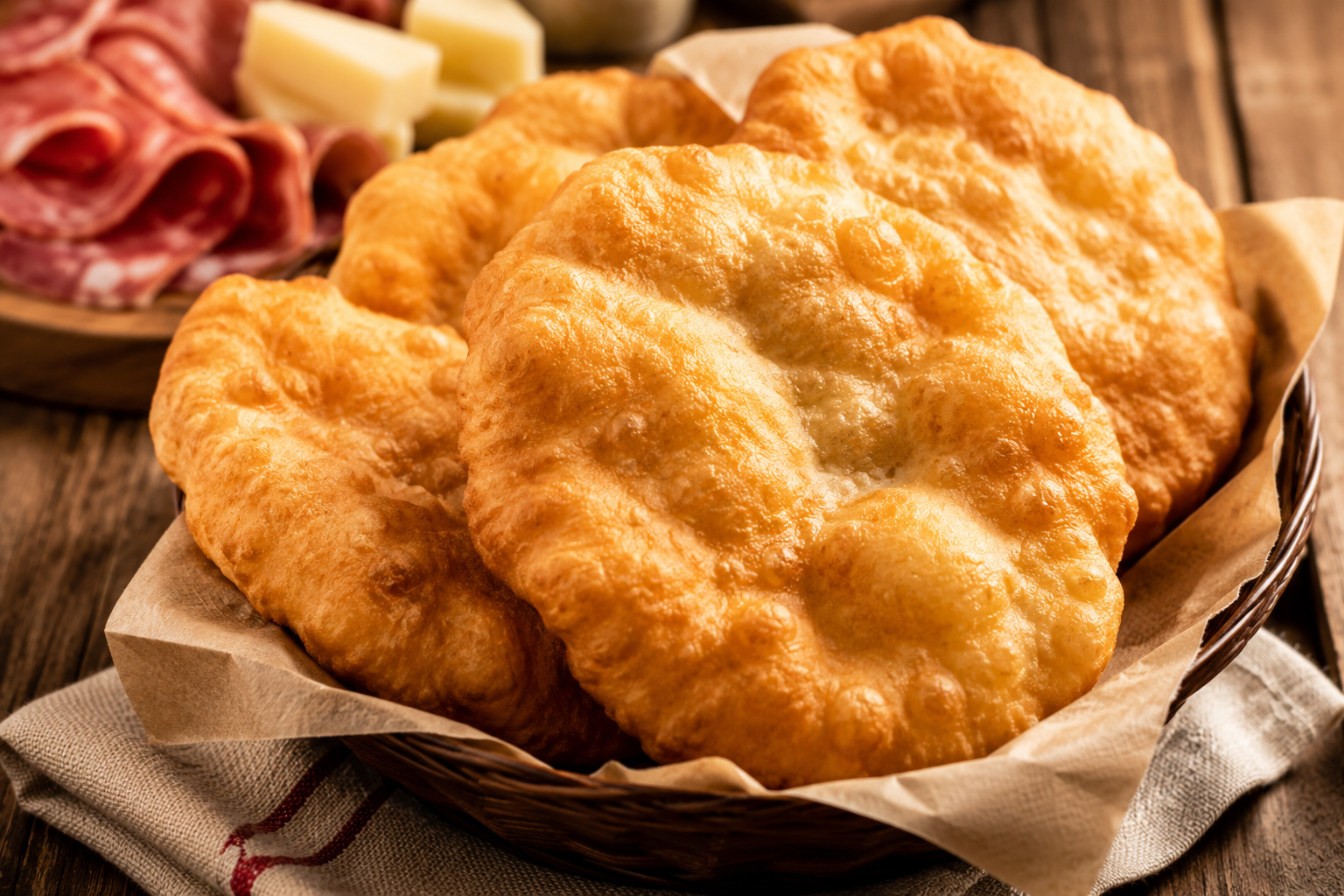
Every flavour speaks of baking, family and village celebrations.
In the village and nearby
Where to eat
A useful, up-to-date selection, ordered by relevance, quality and proximity.
The village in figures
Sant’Angelo Romano,between the castle and the Cornicolani Mountains
A few essential figures to understand the area: a Roman Sabina village developed on Monte Patulo, with Orsini-Cesi Castle as its historic landmark, the Prehistoric Museum in the heart of the village and a landscape opening towards the Macchia di Gattaceca and Macchia del Barco Nature Reserve.
Elevation
at the municipal centre
Residents
residents, ISTAT 2026 data
Area
of the municipal area
Highest elevation
of the municipal area
In the village and nearby
Where to stay
A useful, up-to-date selection, ordered by relevance, quality and proximity.
FAQ about Sant’Angelo Romano
Six practical answers for planning your visit, finding your way around the village and connecting the day with other places in Sabina.
What to see in Sant’Angelo Romano?
The main places include Orsini-Cesi Castle, the village’s symbol, the Prehistoric Museum of the Tiber-Cornicolani Territory, the Church of Santa Liberata, the Macchia di Gattaceca and Macchia del Barco Nature Reserve and the Grotte Cerqueta woodland, also known as Bosco di Nardi, connected with the natural landscapes of the Cornicolani Mountains.
Where is Sant’Angelo Romano?
Sant’Angelo Romano is in Roman Sabina, within the Metropolitan City of Rome Capital. The village stands on Monte Patulo in the Cornicolani Mountains, overlooking the Tiber Valley and linking its historic centre with the natural areas of Macchia di Gattaceca and Macchia del Barco.
How far is Sant’Angelo Romano from Rome?
The approximate distance from Rome is 30–35 km, depending on the starting point and route. It is suitable for a day trip combining a historic village, castle, museum, nature and popular cooking without travelling far from the Rome area.
Why is Orsini-Cesi Castle important?
Orsini-Cesi Castle is Sant’Angelo Romano’s most recognisable symbol. Standing in the heart of the historic centre on Monte Patulo, it reflects the village’s fortified past, the role of noble families and its evolution from a medieval stronghold into a cultural site open to the territory.
What is the Prehistoric Museum of the Tiber-Cornicolani Territory?
It is one of the village’s most important cultural sites. Housed inside Orsini-Cesi Castle, the museum presents the earliest history of the Tiber-Cornicolani territory through finds and evidence connected with human settlement, local archaeology and the landscapes of the Cornicolani Mountains.
Is the Church of Santa Liberata worth visiting?
Yes. The Church of Santa Liberata is a useful stop completing the historic-centre visit. It is connected with local devotion and the community’s religious memory, allowing visitors to understand Sant’Angelo Romano through its places of worship and village traditions.

From this village a new itinerary begins
After the historic centre, connect your visit with another village, a local place to eat or a walking route and build a complete day in Sabina.