
Central Sabina
Scandriglia
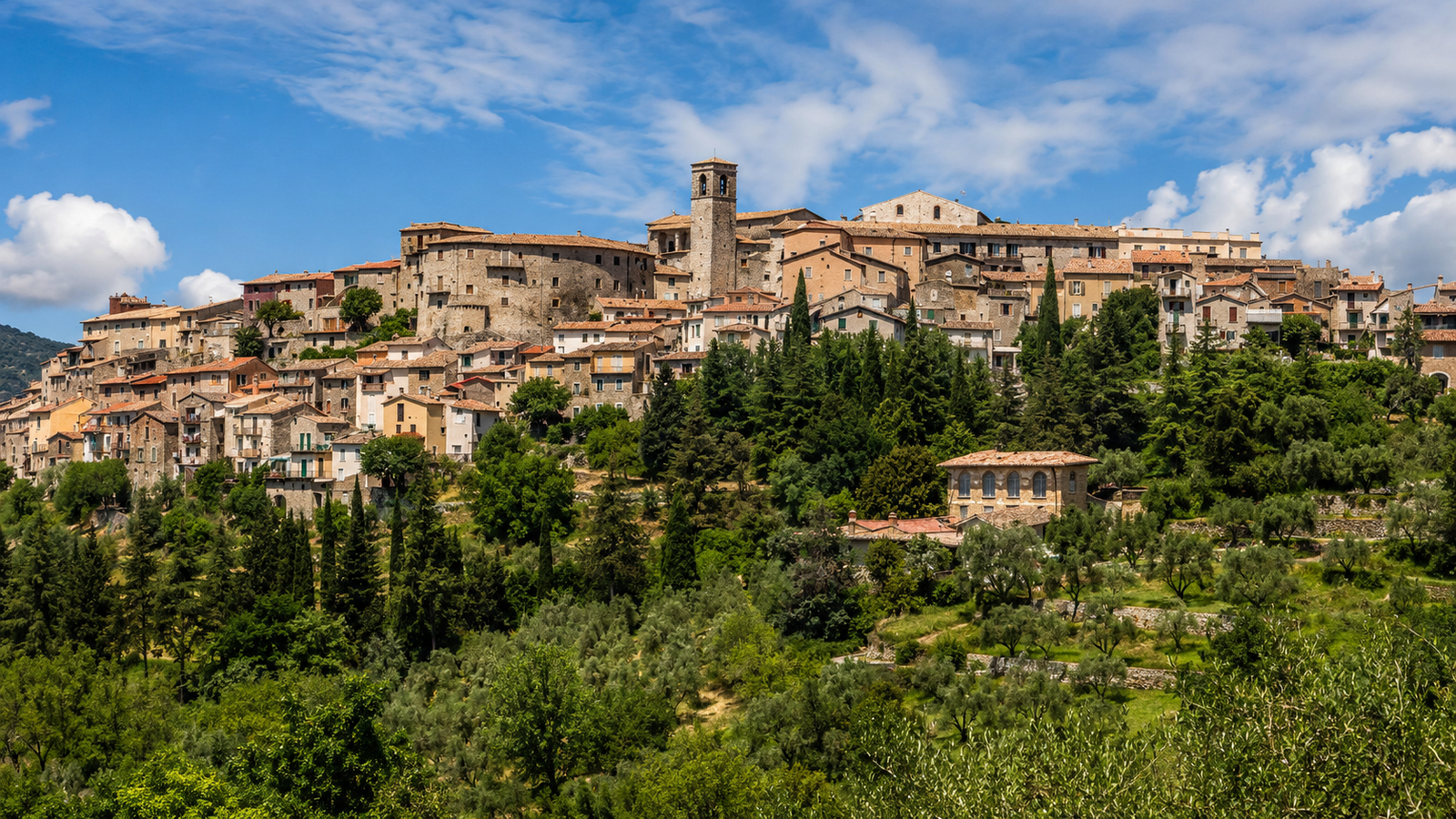
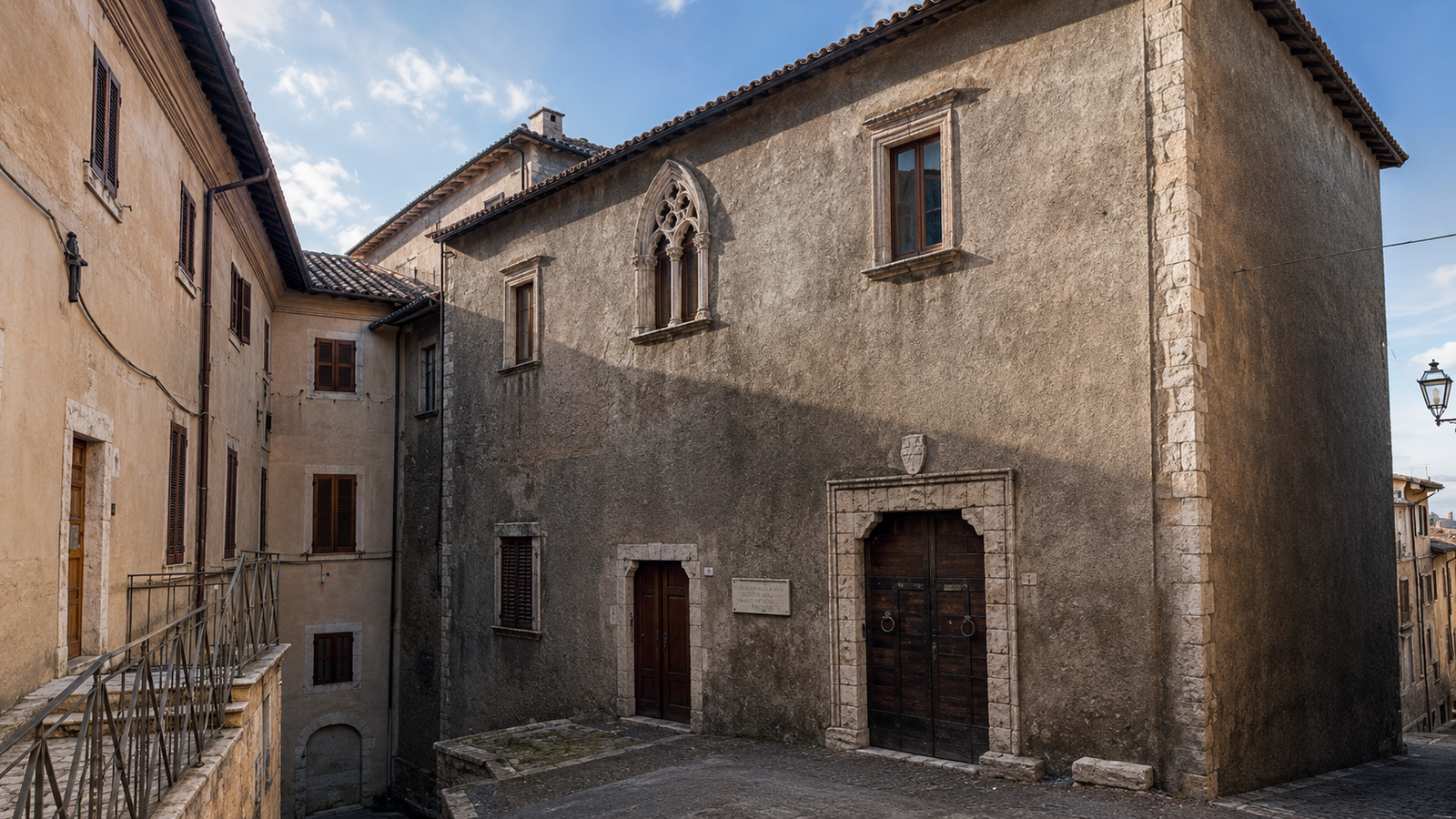
Scandriglia stretches across the northern slopes of the Monti Lucretili, where the historic village opens towards abbeys, convents and outlying settlements spread across the territory. Palazzo degli Anguillara and the Church of the Assunta begin a visit that continues beyond the centre to San Salvatore Minore, San Nicola, Ponticelli Sabino and Roman traces of the ancient Via Salaria.
Central Sabina
Scandrigliathe village continuing into the mountains
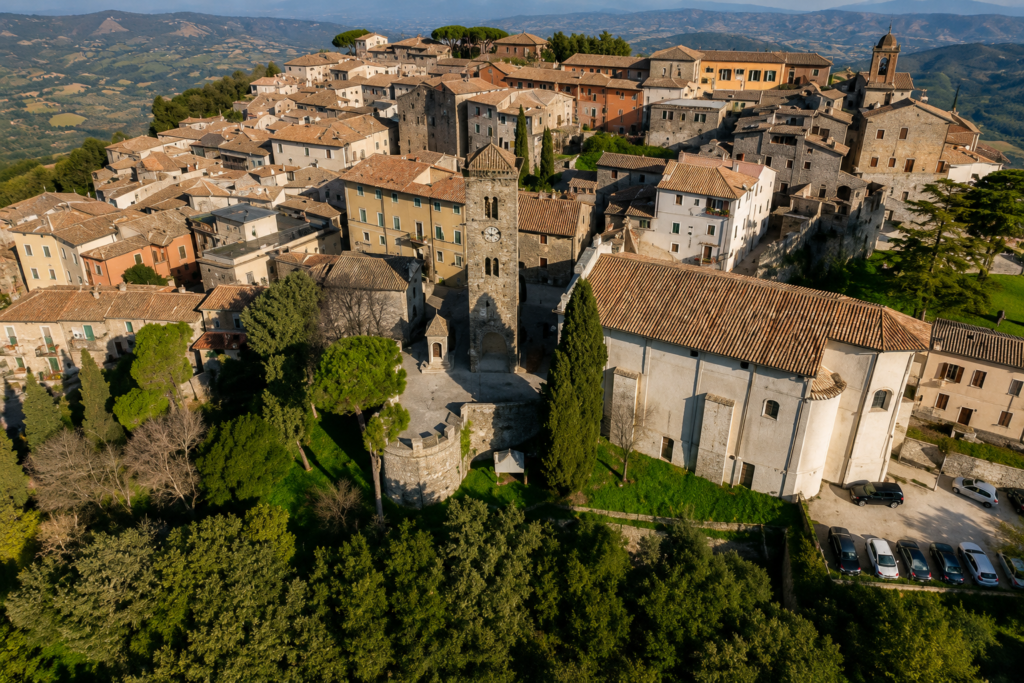
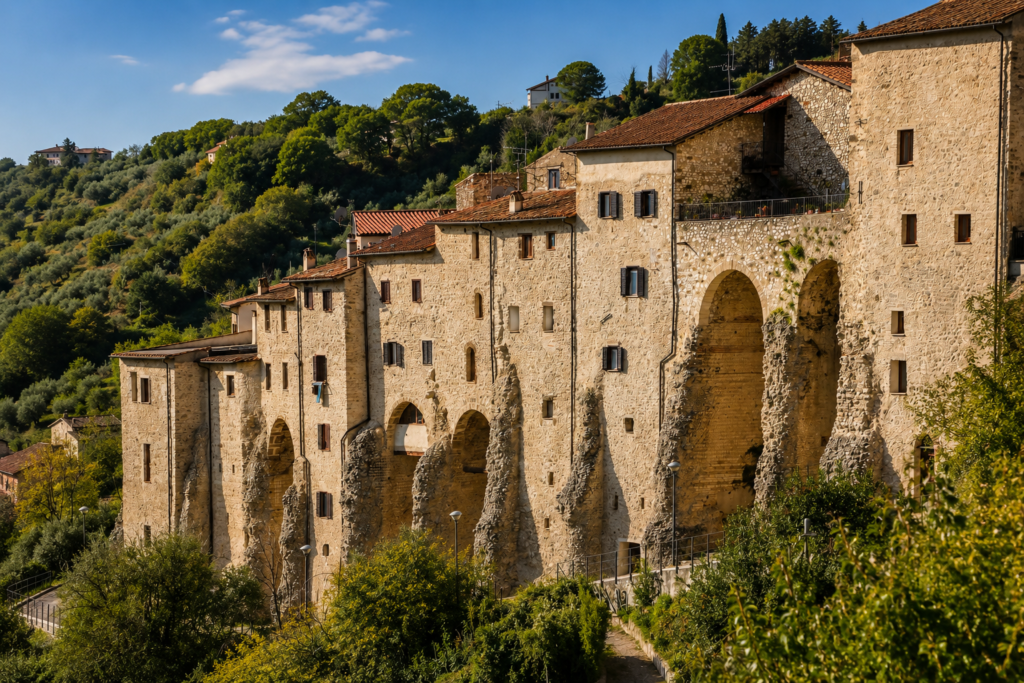
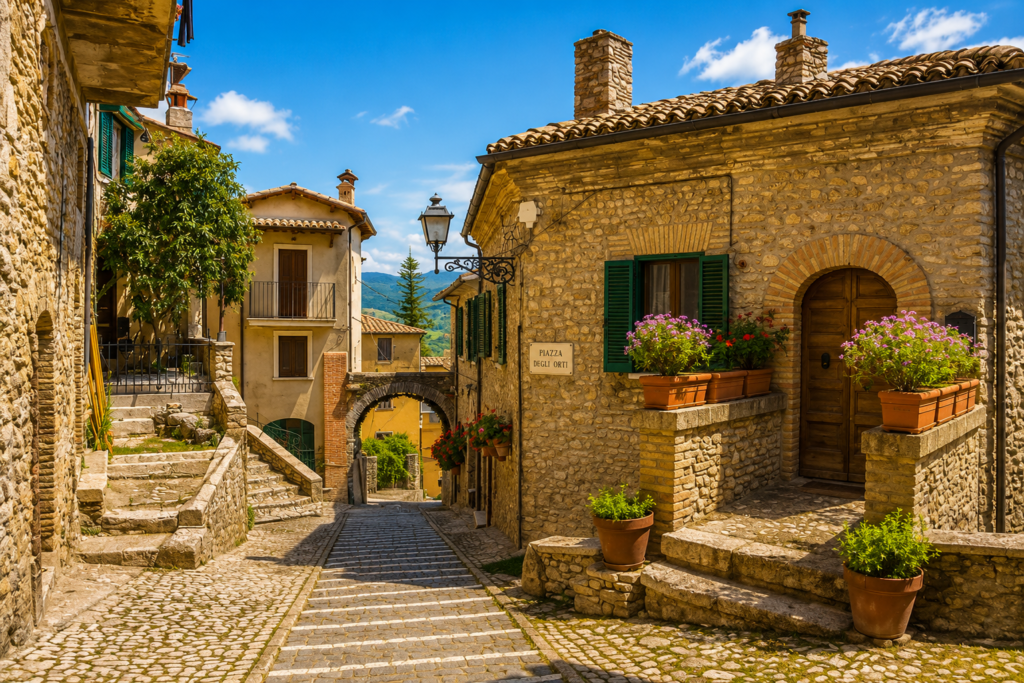
Scandriglia does not end with its historic centre. The village begins among lanes, compact houses, Palazzo degli Anguillara and the Church of the Assunta, then immediately expands into a territory of slopes, olive groves and major religious complexes at the edge of the Monti Lucretili.
This double dimension makes it different: the village on one side, and San Salvatore Minore, the Convent of San Nicola, Ponticelli Sabino and traces of Roman Scandriglia on the other. Ponte del Diavolo, ancient villas and the Via Salaria route show that these mountains were crossed and inhabited long before the medieval village was founded.
On this page you can
- Walk through the historic centre between Palazzo degli Anguillara, the Church of the Assunta and village lanes
- Reach abbeys, convents and Ponticelli Sabino to discover the territory beyond the centre
- Follow Roman traces of the Via Salaria and taste Sagne, Maccaruni and Polentone alla Carbonara
Village of the Anguillara
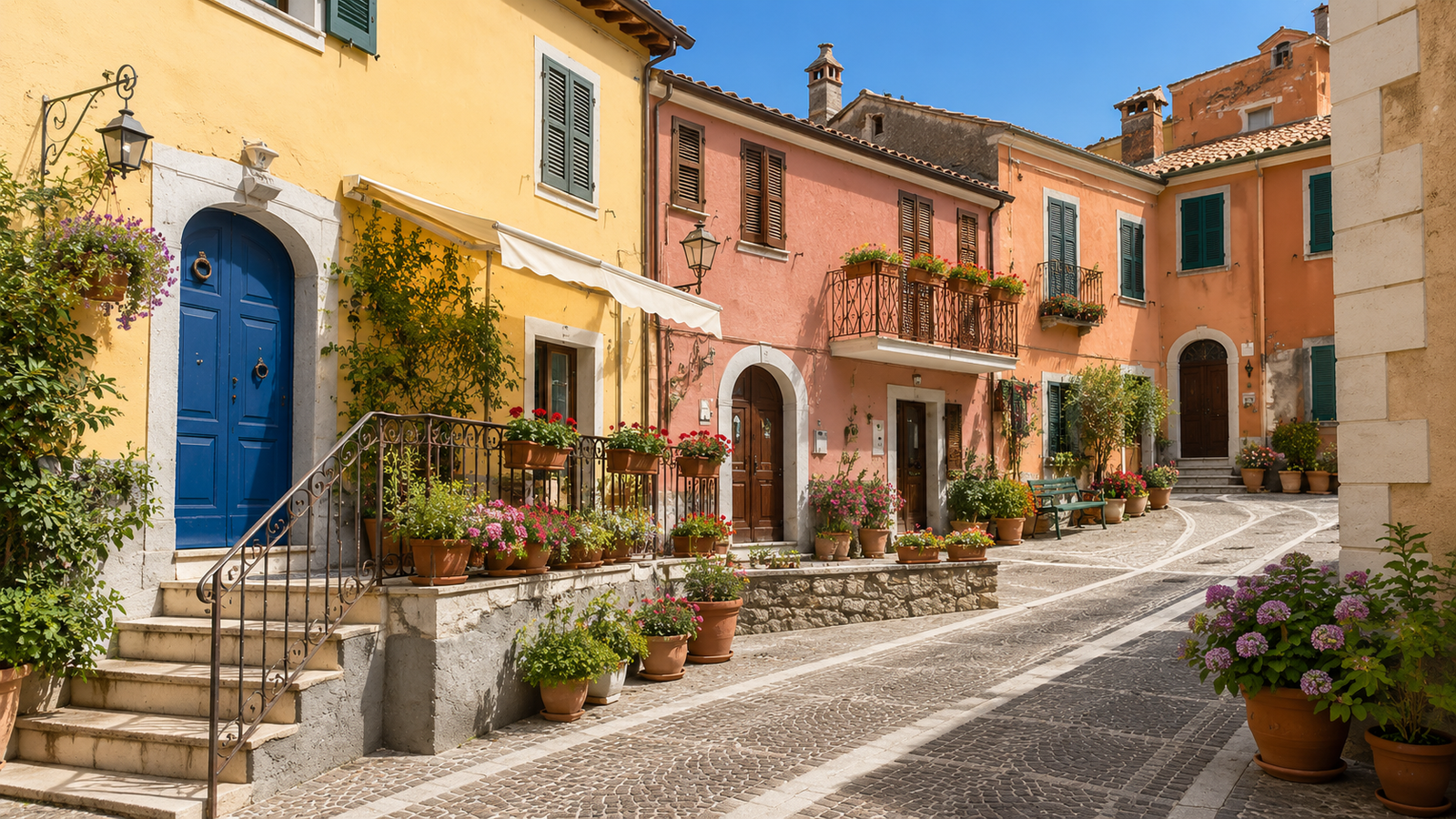
The Renaissance palace and historic centre introduce the most urban part of the visit.
531 metres
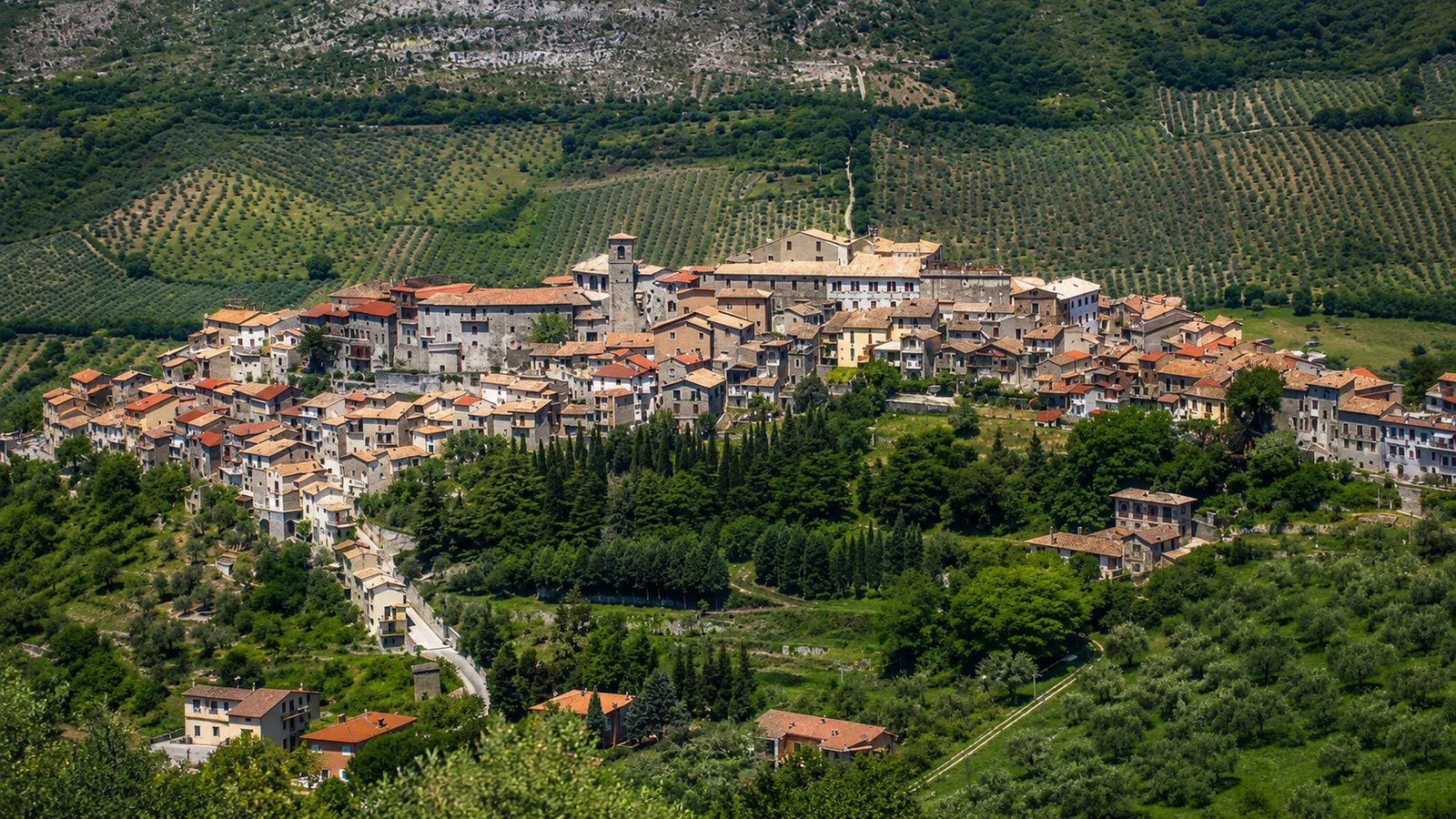
The village stands on the northern slopes of the Monti Lucretili, between Sabina and the mountains.
Abbeys and convents
San Salvatore Minore and San Nicola take the visit beyond the centre into the landscape.
Roman traces
Ponte del Diavolo, villas and the ancient Via Salaria reveal a territory travelled for centuries.
What to see
ExploreScandriglia
Among palaces, abbeys and traces of ancient Scandriglia
Scandriglia combines the character of a medieval village with a much larger territory containing major religious complexes, historic outlying settlements and Roman memories. In the centre are Palazzo degli Anguillara and the Church of the Assunta; just outside emerge San Salvatore Minore Abbey, the Convent of San Nicola and Ponticelli Sabino. The wider story also includes the Roman bridge known as Ponte del Diavolo and traces of ancient Scandriglia spread across the territory.
- Palazzo degli Anguillara and the historic centre, the village’s civic and architectural heart
- The Church of the Assunta, the main religious landmark of the centre
- San Salvatore Minore Abbey and the Convent of San Nicola, between spirituality and landscape
- Ponticelli Sabino, the Roman bridge and evidence of ancient Scandriglia across the territory
In the village and nearby
Local producers
A useful, up-to-date selection, ordered by relevance, quality and proximity.
 Olive oil mill
Monteflavio · 6,3 km
Olio di Stanlio
A test entry for a local olive oil mill.
History and identity
From the Roman Via Salariato the fortified village
Before the medieval village there was a Roman territory crossed by the Via Salaria. The name Scandriglia is associated with Fundus Scandillianus, an estate connected with the Scandillii family. Important traces remain within the municipality: Ponte del Diavolo along the ancient road, rural villas and the major archaeological area associated with the Bruttii Praesentes.
After Roman times the settlement gathered into a fortified form. In 1084 the territory appears connected with Count Erbeo and Farfa monastery; in later centuries it passed under important lordships, including the Orsini, before entering the Papal States in 1639. The present village preserves this layering: a medieval and Renaissance centre overlooking a much older territory.
- Roman bridge · 2nd century BC
- Farfa · 1084
- Papal States · 1639
In the village and nearby
Local services
A useful, up-to-date selection, ordered by relevance, quality and proximity.
 Pharmacy
Featured
Pharmacy
Featured Ascrea · 13,1 km
Test
This is a test entry for a local pharmacy.
 Technical practice
Montelibretti · 9,1 km
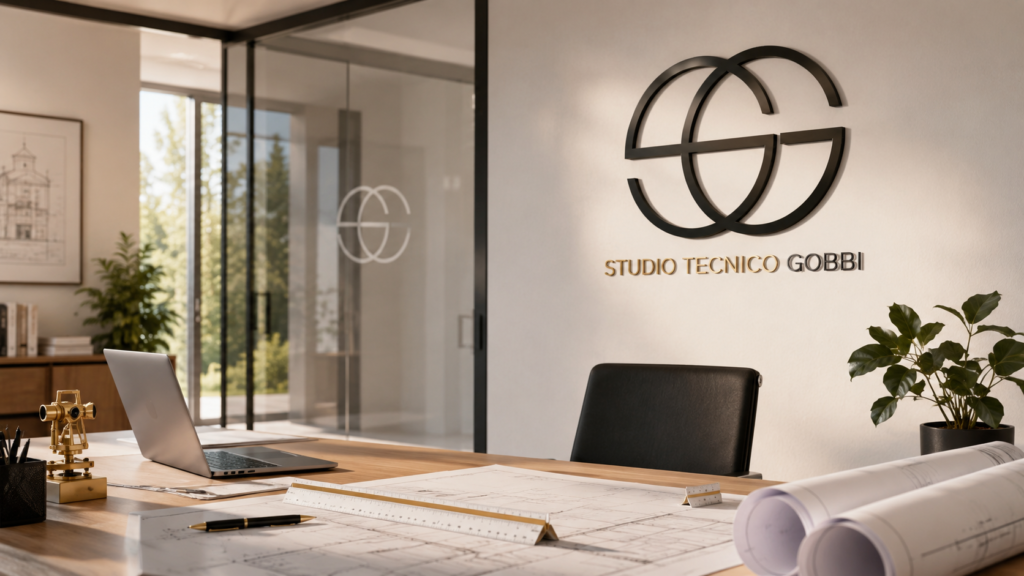
Studio Tecnico Gobbi
Studio Tecnico Gobbi, led by surveyor Stefano Gobbi, is a trusted technical practice in Montelibretti for building design and planning, cadastral and administrative procedures. The practice works on…
Village events calendar
Events in Scandriglia
Events, festivals and local initiatives selected for Scandriglia.
Calendar being updated
No events published
New events will be added as soon as they become available.
Browse the full calendar→Village flavours
at the tableto discover
Handmade pasta, festive dishes and mountain cooking: three recipes expressing Scandriglia, the settlement of Ponticelli Sabino and the world of charcoal burners and woodsmen.
Sagne Scandrigliesi
The village’s signature dish: broad, rustic handmade sagne served with a rich red sauce made from guanciale, pancetta and finely chopped beef.
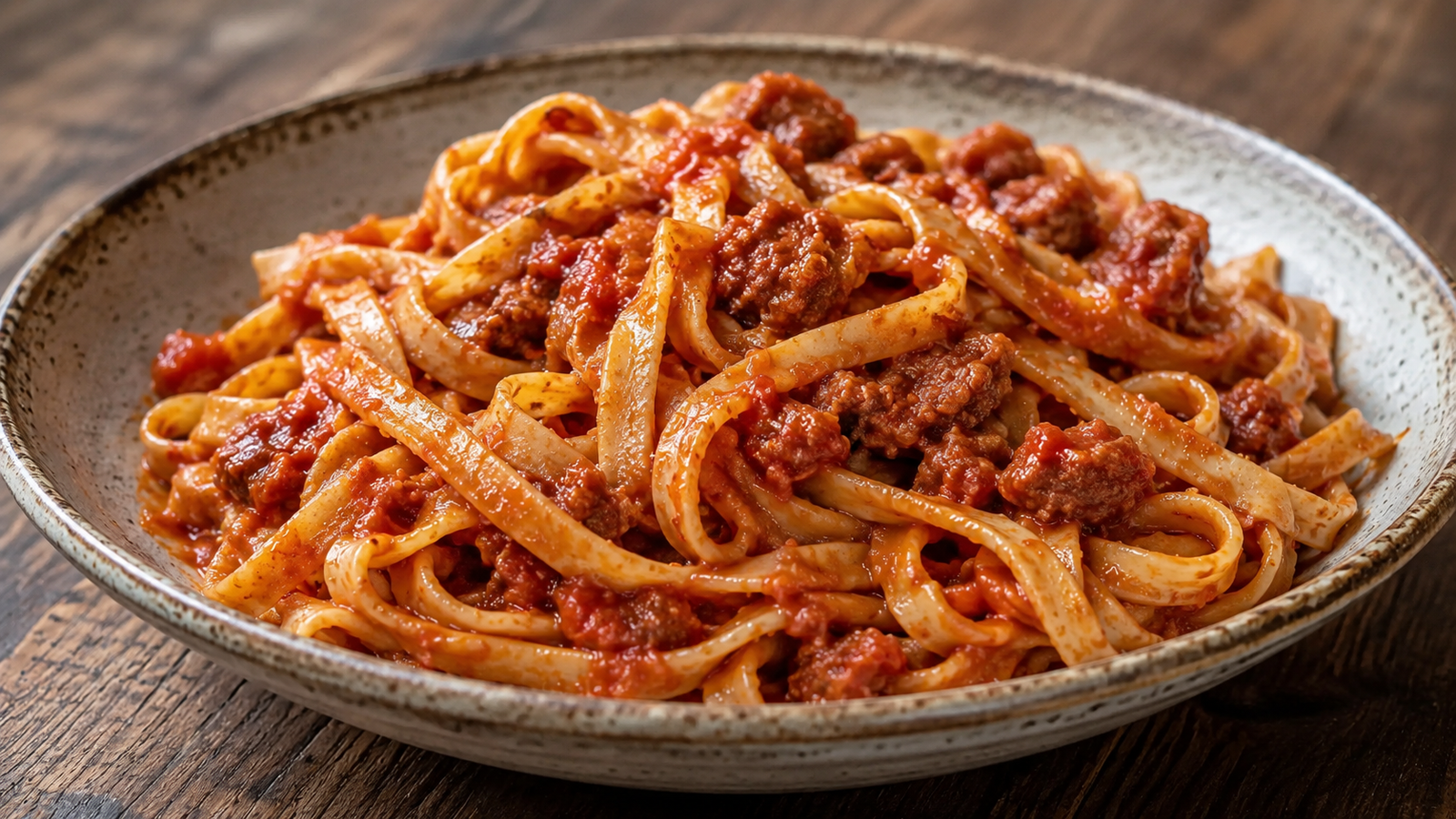
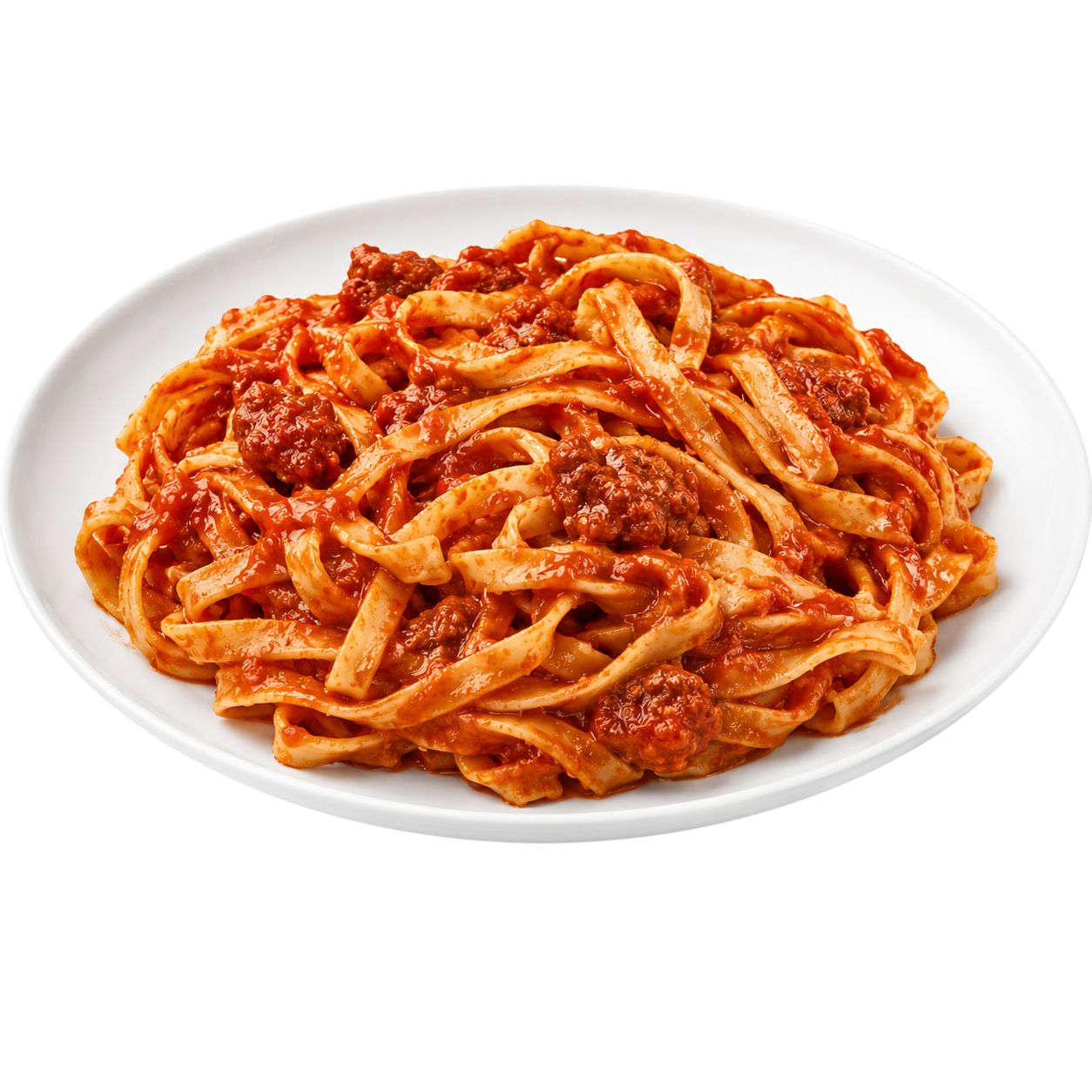 First courseSagne ScandrigliesiBroad handmade pasta with a rich red meat sauce.
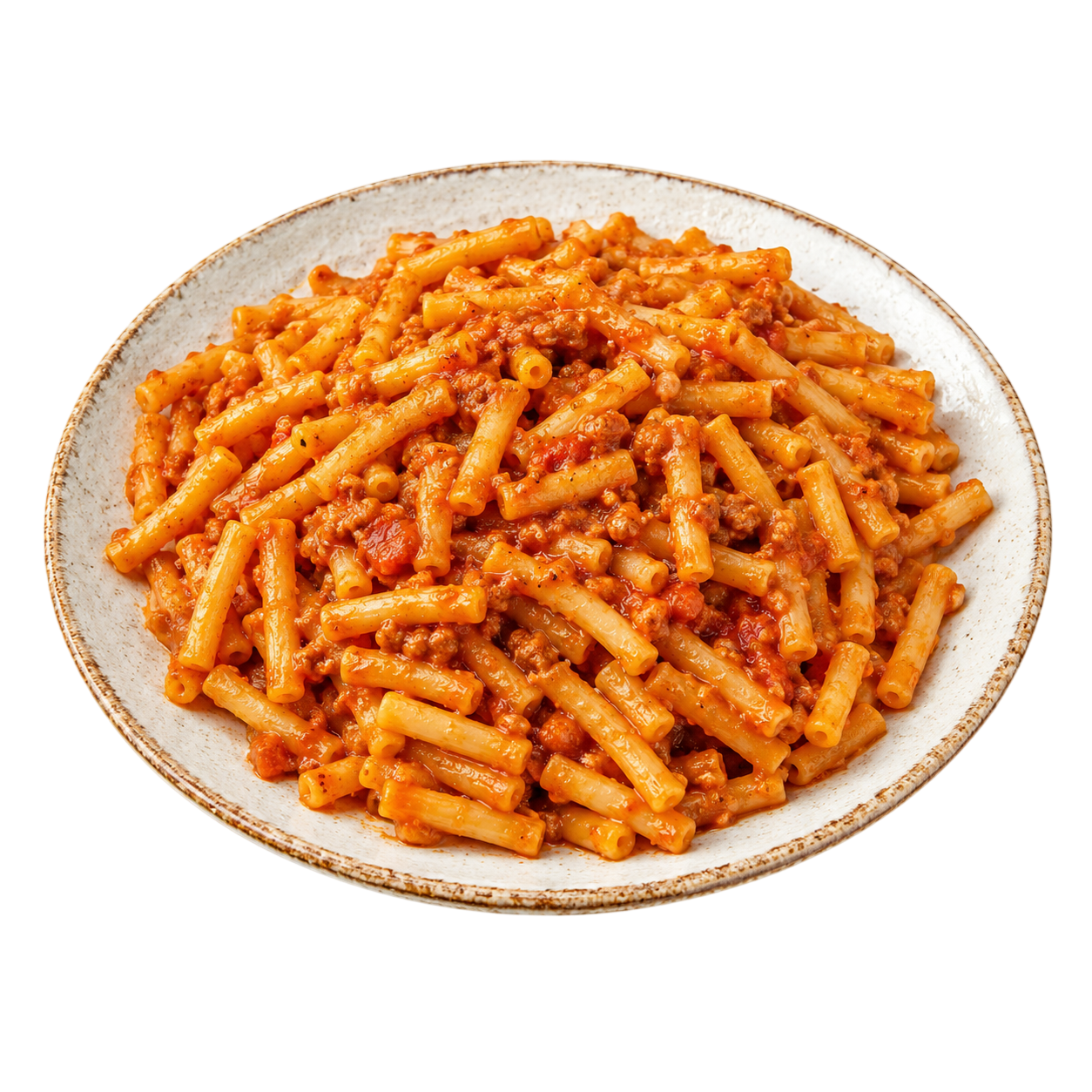 First courseMaccaruni di PonticelliShort tubular pasta with red sauce, celebrated at the local food festival.
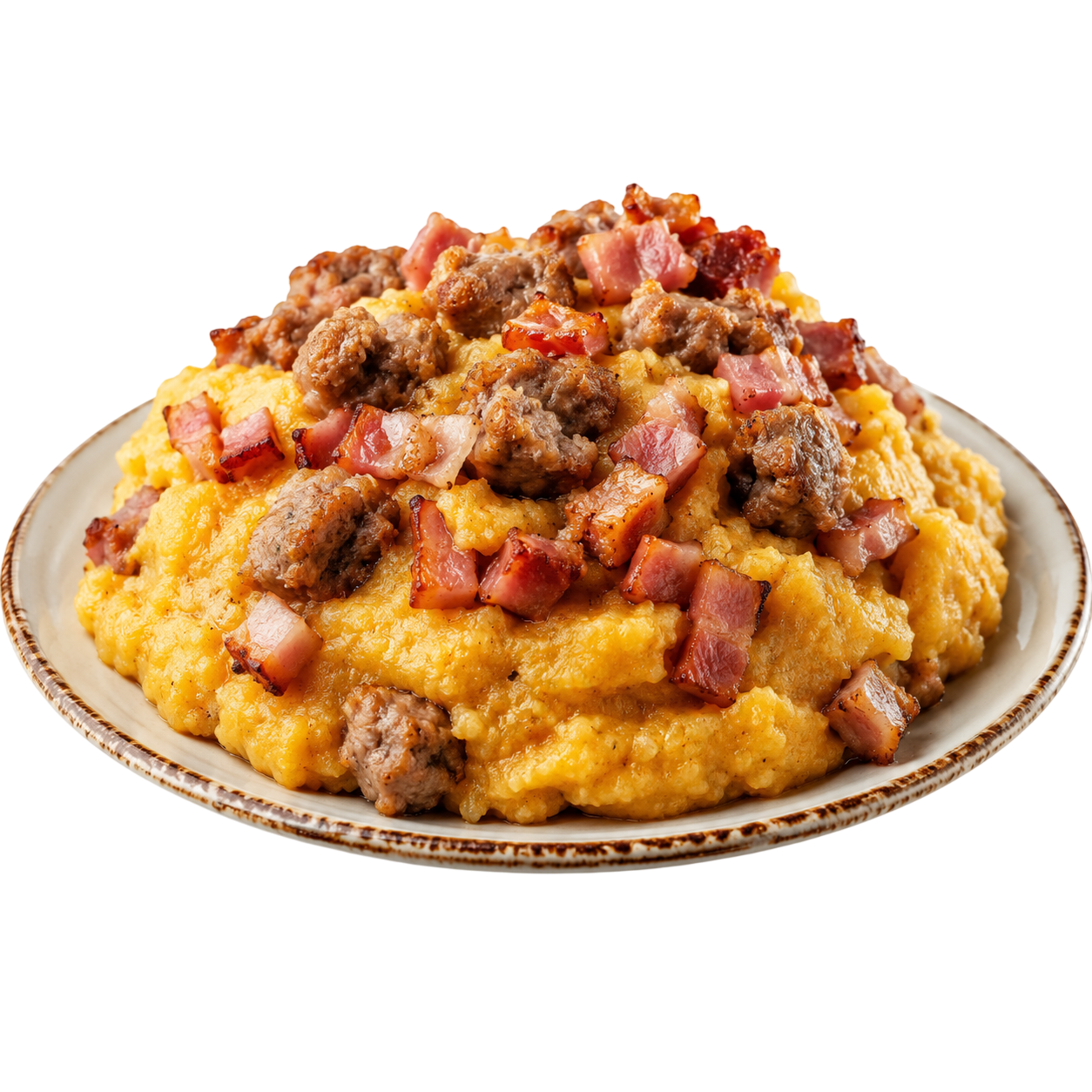 Mountain cookingPolentone alla CarbonaraHot polenta with pancetta, sausage and black pepper.
Flavours of Scandriglia
Ingredients
Method
In the village and nearby
Where to eat
A useful, up-to-date selection, ordered by relevance, quality and proximity.
Bar / Café
Montelibretti · 9,1 km
Bar Test 01
A welcoming meeting place in the heart of Sabina, ideal for a leisurely breakfast, a quick coffee or an aperitivo after a walk through historic lanes, scenic views…
 Restaurant
Monteflavio · 6,3 km
Pala del Palo
A test entry for a local restaurant.
Pizzeria
Castel di Tora · 11,6 km
Pizzeria Test 02
Pizza is always a delight, especially when it is made in the Neapolitan style.
The village in figures
Scandrigliabetween village and the Monti Lucretili
A centre at 531 metres and a very large municipal territory rising to the peaks of the Lucretili. Scandriglia’s figures describe a village that does not exist only in its historic centre, but spreads across outlying settlements, mountains, abbeys and varied landscapes.
Elevation
elevation of the town hall
Residents
residents on 1 January 2026
Area
a large municipality between villages and mountains
Highest elevation
Monte Pellecchia, the territory’s highest peak
In the village and nearby
Where to stay
A useful, up-to-date selection, ordered by relevance, quality and proximity.
 Hotel
Hotel
Monteflavio · 6,3 km
Hotel Villa Prova
A test hotel entry.
FAQ about Scandriglia
Six practical answers for planning your visit, finding your way around the village and connecting the day with other places in Sabina.
What should I see in Scandriglia?
In the historic centre, main stops are Palazzo degli Anguillara and the Church of the Assunta. Outside the village, visit San Salvatore Minore Abbey, the Convent of San Nicola and Ponticelli Sabino. The territory’s story also includes Ponte del Diavolo and other evidence of ancient Roman Scandriglia.
Where is Scandriglia?
Scandriglia is in the province of Rieti, in Central Sabina, on the northern slopes of the Monti Lucretili. Its large municipal territory includes the main centre, outlying settlements, farmland, woodland and mountain ridges.
How should I organise a visit to Scandriglia?
The historic centre is easily explored on foot, combining Palazzo degli Anguillara and the Church of the Assunta. Reaching San Salvatore Minore, San Nicola and Ponticelli Sabino requires travel across the territory, so Scandriglia works best as a multi-stop itinerary rather than a single walk.
What is Ponte del Diavolo?
Ponte del Diavolo is a Roman bridge preserved along the ancient Via Salaria. It is one of the territory’s most important archaeological remains and helps reveal Scandriglia’s roots long before the medieval village was formed.
What are Sagne Scandrigliesi?
Sagne Scandrigliesi are the village’s most distinctive dish: broad, rustic handmade pasta with a rich red sauce prepared from guanciale, pancetta and beef. Local tradition also includes Polentone alla Carbonara and Maccaruni di Ponticelli.
What should I see at Ponticelli Sabino?
Ponticelli Sabino is a historic settlement within the municipality and adds another small centre with its own identity. Local sites include Santa Maria del Colle and the Franciscan Sanctuary of Santa Maria delle Grazie; the settlement is also known for its Maccaruni.

From this village a new itinerary begins
After the historic centre, connect your visit with another village, a local place to eat or a walking route and build a complete day in Sabina.