

Tiber Valley
Tarano
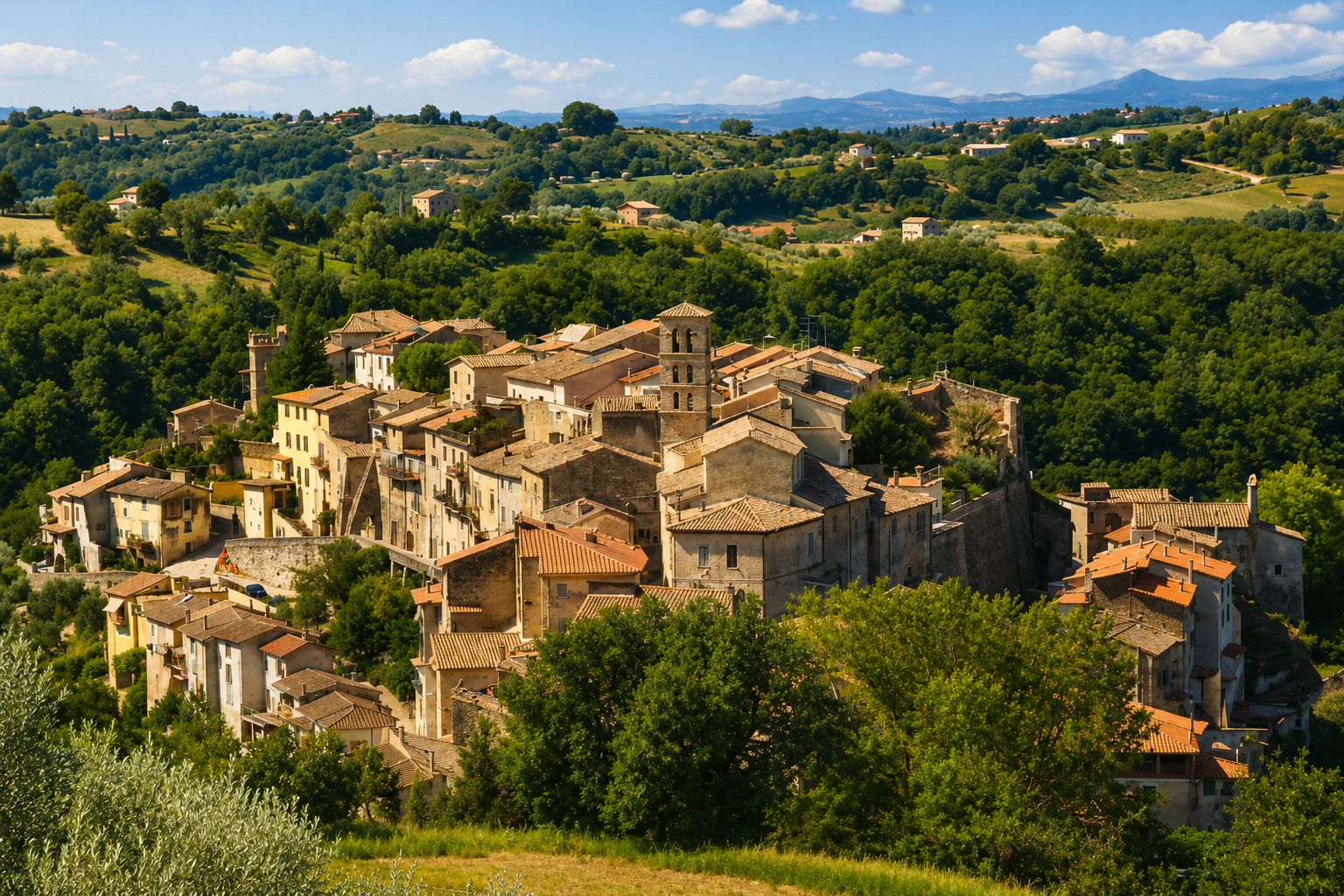
Tarano is a village in the Rieti area of Sabina, set among hills, olive groves and small historic settlements close to the Umbrian border. The old centre preserves the Collegiate Church of Santa Maria Assunta, with its late Romanesque façade and Cosmatesque rose window, while Santa Maria della Stella, Madonna della Noce and the hamlet of San Polo reveal a rural, quiet and authentic Sabina connected with extra virgin olive oil, green landscapes and village life.
Tiber Valley
Taranobetween stone and memory
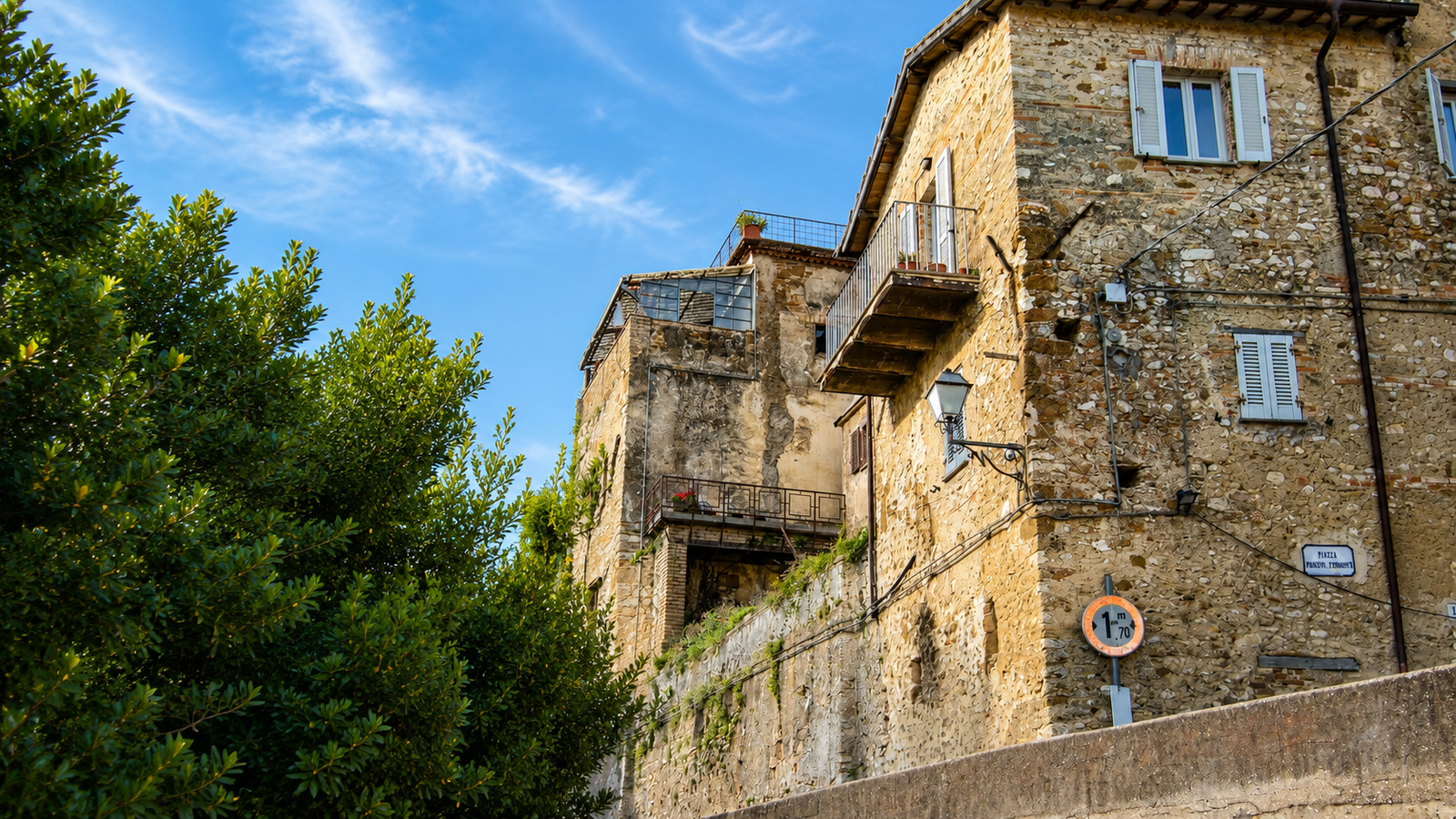
Tarano is a Tiber Valley village set among hills, farmland and old roads. Its historic centre preserves stone lanes, quiet passages and views leading towards the Church of Santa Maria Assunta, dominated by a Romanesque bell tower that is one of the village’s most recognisable features.
Around the village, the itinerary continues to the Church of San Polo, the old Via Campana and the Sanctuary of Madonna della Noce, places revealing the close relationship between community, faith and territory. Tarano is a discreet and authentic corner of Sabina to explore slowly through medieval architecture, rural roads and local memory.
On this page you can
- Walk through the historic centre among lanes, arches and stone views
- Discover Santa Maria Assunta, the Romanesque bell tower and the Church of San Polo
- Follow Via Campana to the Sanctuary of Madonna della Noce
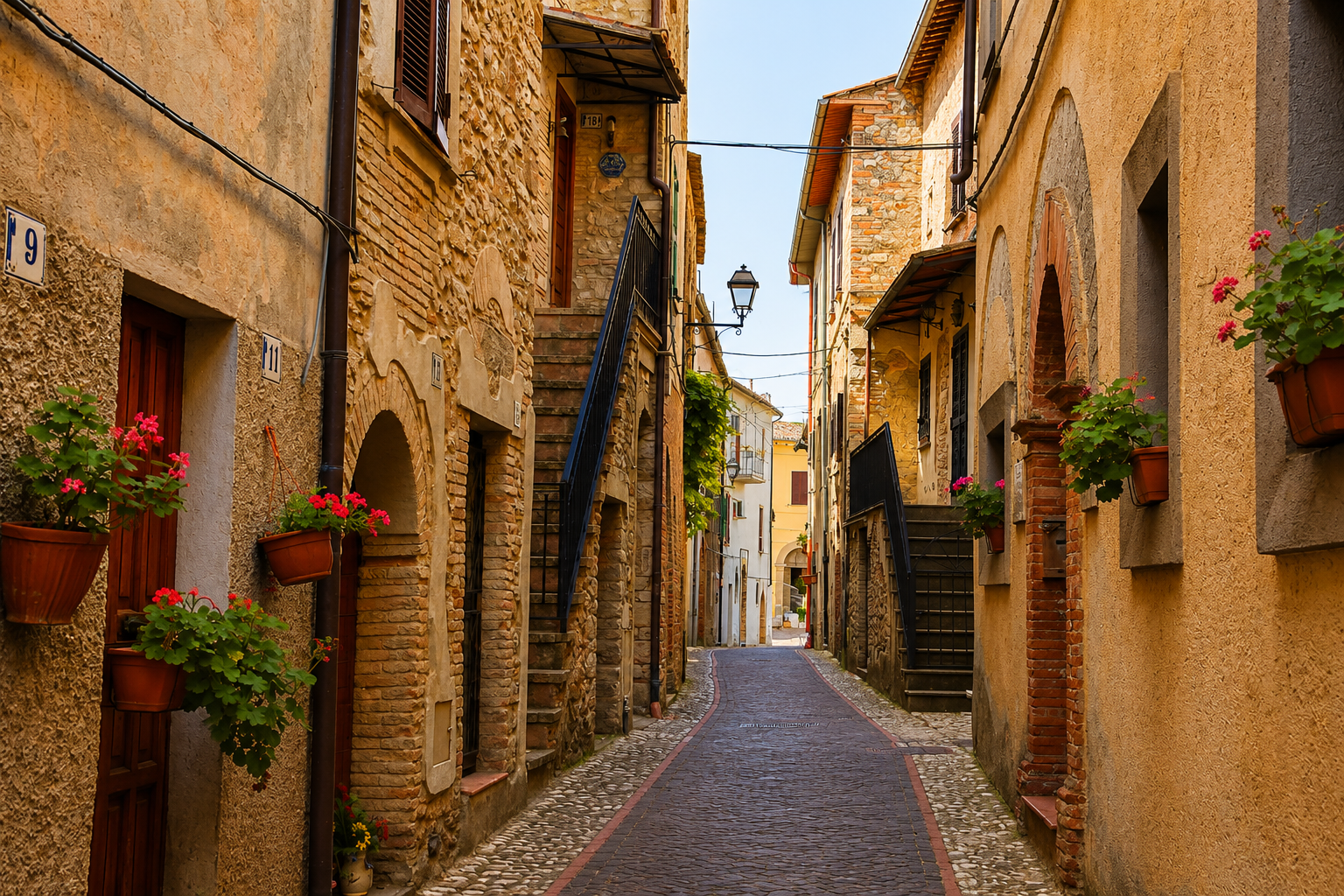

Historic centre
Lanes, arches and stone houses preserve the most authentic atmosphere of the old village.
Santa Maria Assunta
The church and Romanesque bell tower form one of Tarano’s most recognisable ensembles.
San Polo
An old church set in the countryside and connected with the territory’s religious and rural history.
Madonna della Noce
The sanctuary expresses popular devotion, landscape and memory along the roads outside the village.
What to see
Taranoto discover
Medieval villages, Romanesque bell towers and old routes
Tarano reveals a Sabina of compact villages, old churches and country roads. The itinerary joins the historic centre gathered around Santa Maria Assunta and its Romanesque bell tower, the medieval hamlet of San Polo, the old Via Campana and the Sanctuary of Madonna della Noce, set in a rural landscape to be explored slowly.
- Santa Maria Assunta, Cosmatesque rose window and Romanesque bell tower
- San Polo, fortified village and Church of Santi Pietro e Paolo
- Via Campana, an old rural route towards the Tiber Valley
- Madonna della Noce, a small country church surrounded by nature
In the village and nearby
Local producers
A useful, up-to-date selection, ordered by relevance, quality and proximity.
History and identity
Tarano,between Farfa and the Middle Ages
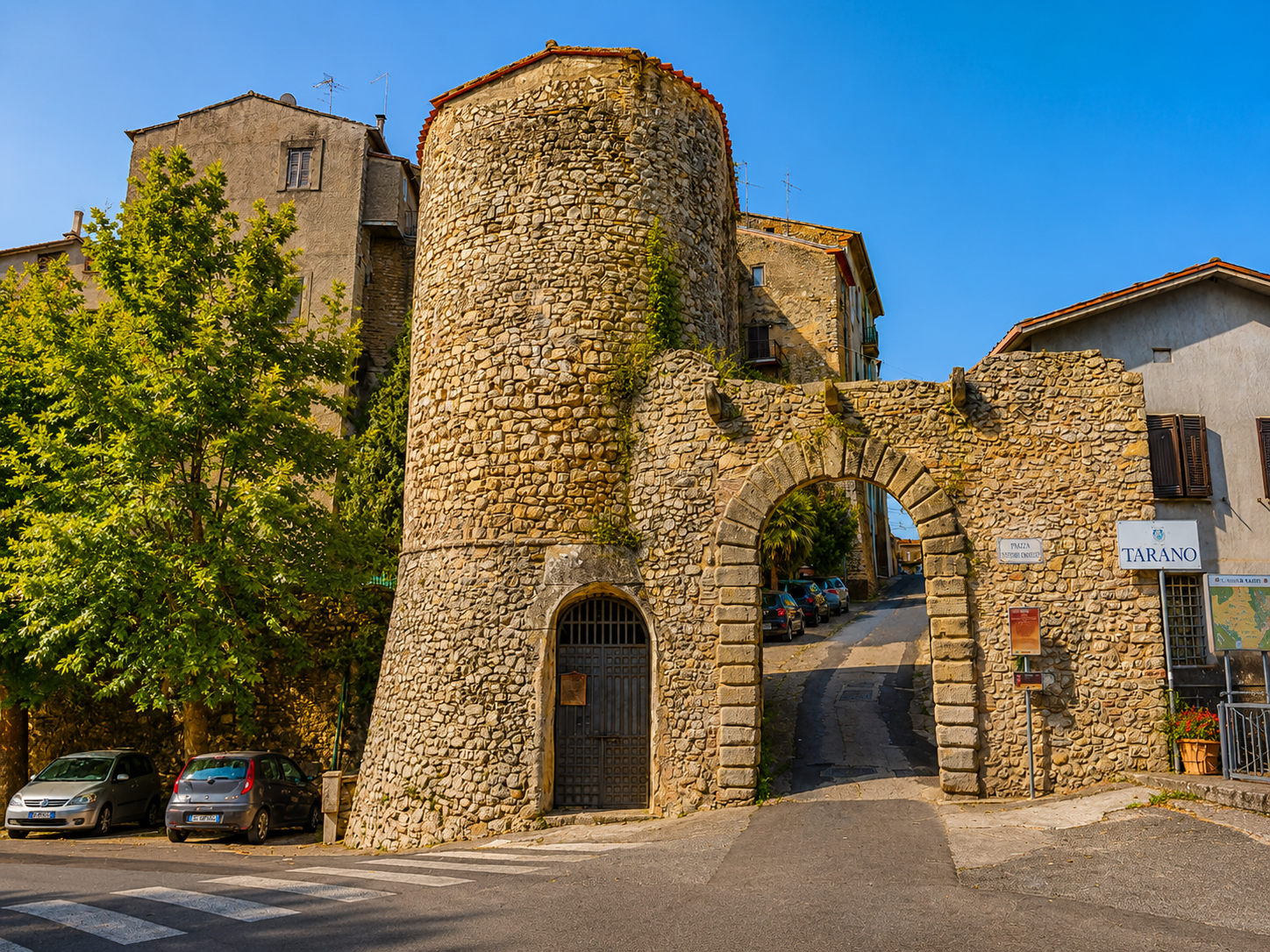
Tarano’s roots reach deep into the Middle Ages: the earliest record of its castle dates to 952. During the following centuries the territory entered the sphere of Farfa Abbey, which consolidated interests and property here in the 11th century, while Papal influence over village life grew stronger from the 12th century.
The old centre still preserves the imprint of this long history through stone houses, arches, lanes and intimate routes. Santa Maria Assunta stands at its heart with a late Romanesque façade, Cosmatesque rose window and Romanesque bell tower; around it, San Polo and Madonna della Noce reveal a territory where religious memory, rural landscape and Sabina identity remain closely connected.
- Farfa Abbey
- Medieval village
- Santa Maria Assunta
In the village and nearby
Local services
A useful, up-to-date selection, ordered by relevance, quality and proximity.
Village events calendar
Events in Tarano
Events, festivals and local initiatives selected for Tarano.
Calendar being updated
No events published
New events will be added as soon as they become available.
Browse the full calendar→Authentic flavours
Taranopasta and beans
Tarano’s food story begins with Pasta alla Fijola, a local preparation connected with the tables of San Polo, where pasta meets a rustic, enveloping bean sauce. It is a simple and substantial dish born from country cooking.
Alongside Pasta alla Fijola, Tarano preserves the strong flavour of beans with pork rind and the aroma of Sabina PDO olive oil, used for bruschetta and country recipes. These honest flavours are connected with olive mills, festivals and the convivial life of Tarano and San Polo.
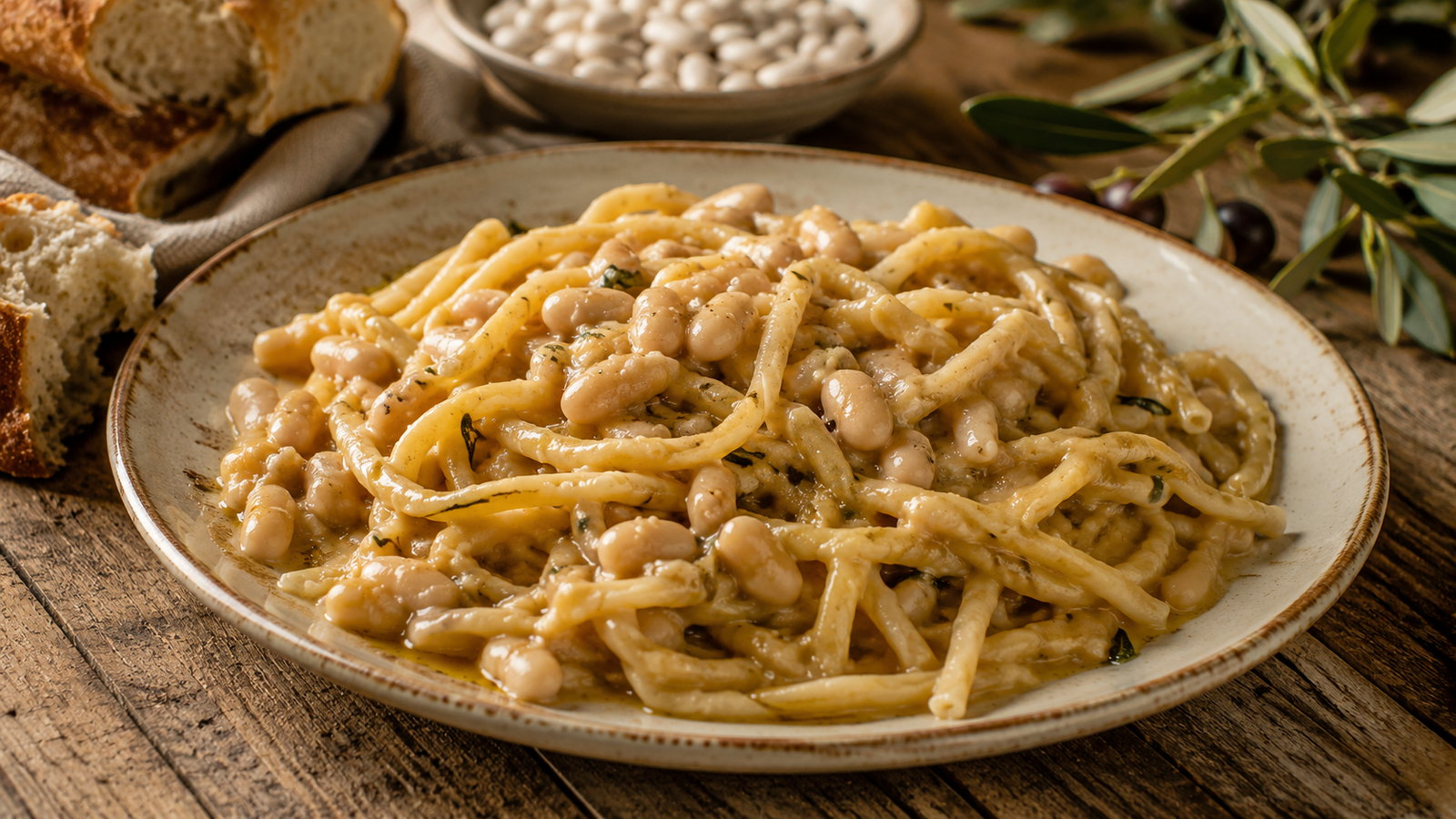
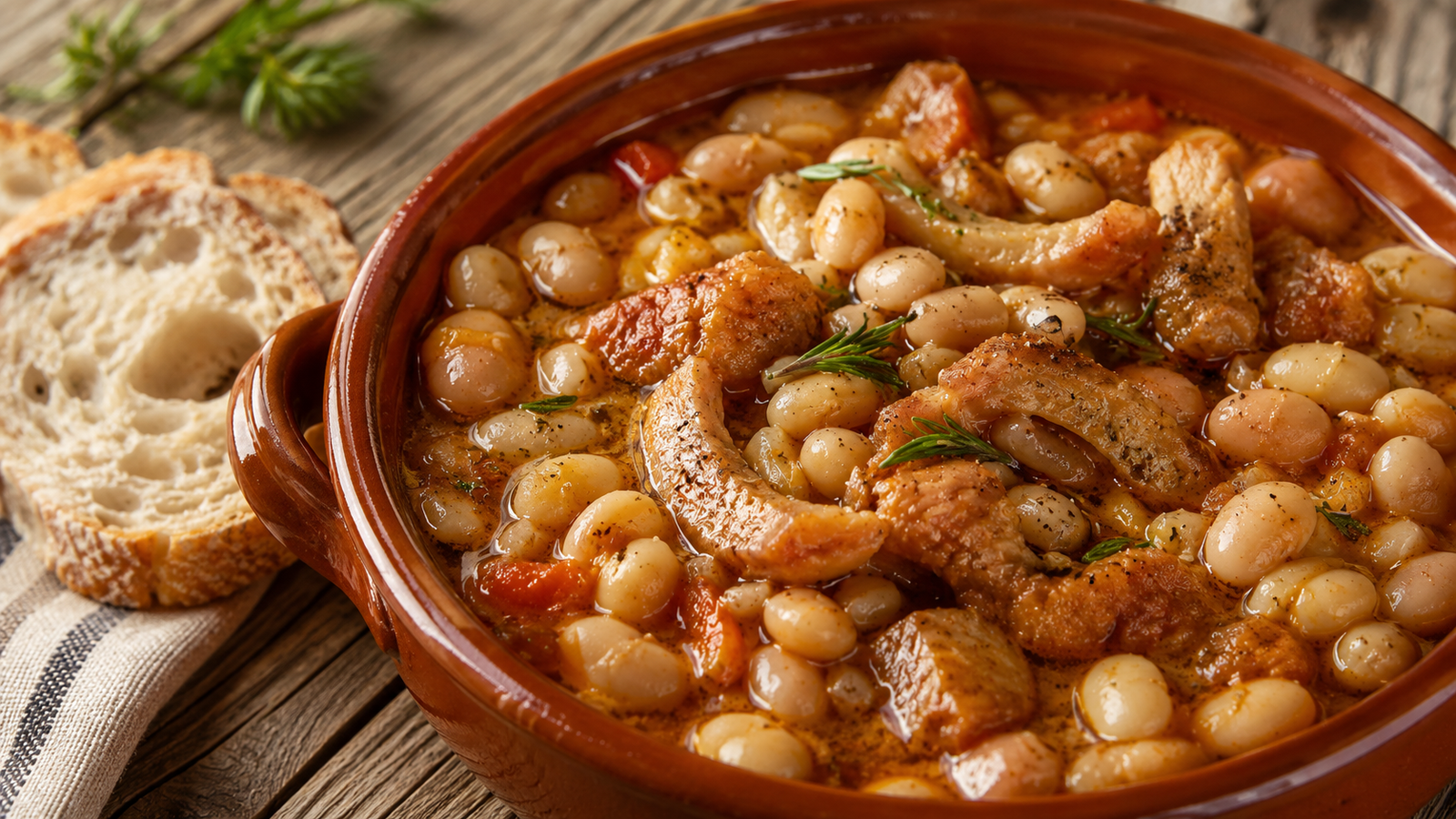

At Tarano, Pasta alla Fijola, beans with pork rind and the aroma of Sabina PDO olive oil come together.
In the village and nearby
Where to eat
A useful, up-to-date selection, ordered by relevance, quality and proximity.
The village in figures
Tarano,among villages and countryside
A few essential figures to understand the area: elevation, residents, municipal area and approximate journey time from Rome, between the medieval historic centre, hamlets, Sabine countryside and the valley crossed by the Campana stream.
Elevation
of the historic centre
Residents
within the municipality
Area
of the municipal area
From Rome
approximate driving time
In the village and nearby
Where to stay
A useful, up-to-date selection, ordered by relevance, quality and proximity.
FAQ about Tarano
Six practical answers for planning your visit, finding your way around the village and connecting the day with other places in Sabina.
What to see in Tarano?
Places worth visiting include the medieval historic centre, the Church of Santa Maria Assunta with its Romanesque bell tower, the hamlet of San Polo, the old Via Campana and the Sanctuary of Madonna della Noce. Though different in character, they are connected by an authentic rural landscape and a history still visible in stone, arches, churches and country routes.
Where is Tarano?
Tarano is in Lazio, in the province of Rieti, within Lower Sabina. The historic centre stands on a rise surrounded by countryside and small waterways, in a territory that also includes San Polo and other settlements. Its position suits itineraries between villages, rural landscapes and places in Sabina close to the Tiber Valley.
How do you reach Tarano?
Tarano is reached mainly by car through the road network of Lower Sabina and the Tiber Valley routes. The historic centre is easy to explore on foot. A car is useful for discovering San Polo, Via Campana and the Sanctuary of Madonna della Noce across the wider municipal area.
Why visit Tarano?
Tarano suits visitors looking for a quieter and more intimate side of Sabina. The medieval centre, Santa Maria Assunta, San Polo, rural roads and small sanctuaries reveal a territory without spectacle but rich in detail, silence and authenticity. It is ideal for a slow visit between local history and landscape.
Which flavours define Tarano?
Tarano’s cooking follows rural Sabina tradition through extra virgin olive oil, bread, homemade pasta, meat, seasonal vegetables and country recipes. Rather than one single emblematic dish, its identity lies in simple ingredients and home cooking.
What can you do around Tarano?
Short itineraries from Tarano can include Forano, Collevecchio, Montebuono, Cantalupo in Sabina and other villages of Lower Sabina. The area suits walks, photography, food stops and slow days among nearby villages, countryside, olive groves and panoramic back roads.

From this village a new itinerary begins
After the historic centre, connect your visit with another village, a local place to eat or a walking route and build a complete day in Sabina.